Who Are the Top Industrial Machinery Automation Suppliers in China?
Who are the top industrial machinery automation suppliers in China? The answer depends on the machinery, production goals, and support a buyer needs. A supplier that fits an automotive plant may not suit a food-packaging line. Even within one sector, machine size, cycle time, and factory conditions can change the best choice.
China’s market includes companies working across industrial robots, control systems, machine vision, drives, and complete production lines. A credible comparison should look beyond a polished catalog. Check whether a supplier can explain its integration process, provide relevant project references, and support commissioning and maintenance. Ask for details: controller compatibility, spare-parts lead times, operator training, and response times when a line stops. Small points can have large consequences.
Price matters, but it is only one part of the decision. A lower initial quote may exclude tooling, installation, or software changes. That is easy to miss. Buyers should also consider documentation quality, system reliability, and the supplier’s ability to adapt equipment to a real factory floor. No shortlist can fit every operation, and published rankings may not reflect a buyer’s actual requirements. This guide examines prominent Chinese suppliers and the capabilities they offer, while noting what to verify before making a decision. The practical test is straightforward: can the equipment perform reliably, and can the supplier help when conditions change? That answer deserves more attention than a headline ranking.
What Industrial Machinery Automation Suppliers Provide
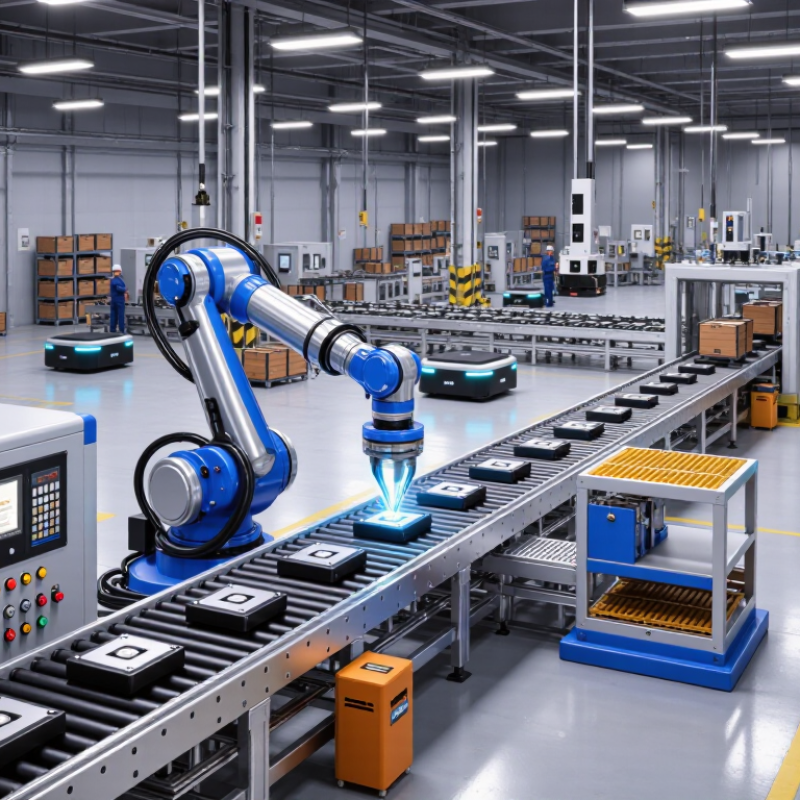
Industrial machinery automation suppliers in China may provide much more than control cabinets. Their work can include process reviews, electrical design, PLC and HMI programming, servo drives, sensors, machine vision, and robotic handling. They may also integrate conveyors, feeders, and inspection stations into an existing production line. A practical supplier should ask about cycle time, product variation, floor space, and operator workflows before proposing equipment. Details matter: a sensor placed near a vibrating press may need a different mount and signal filter.
Tips: Ask for a scope that separates hardware, programming, installation, and commissioning. Request sample layouts and acceptance criteria. A polished demonstration can still hide changeover delays, so test with your own parts and operators.
After installation, suppliers may provide operator training, maintenance schedules, spare-parts lists, and remote troubleshooting. Confirm who responds when a line stops, what documentation is delivered, and whether source files are included. For older machines, retrofit work can add monitoring or replace obsolete controls without rebuilding the entire line. However, compatibility is not guaranteed; old wiring diagrams may be incomplete, and small interface issues can consume days. Set measurable targets for uptime, defect detection, and cycle time, then verify them during a production trial.
How China’s Industrial Automation Supplier Market Is Organized
China’s industrial automation supplier market is organized as a layered production network, not a single vendor list. Component makers provide controllers, sensors, drives, and motion systems. Machinery builders combine these parts into packaging lines, machine tools, or robotic work cells. System integrators connect equipment, software, and safety controls at the factory. They also handle commissioning and maintenance. That distinction matters.
The International Federation of Robotics’ World Robotics 2024 report recorded 276,288 industrial robot installations in China in 2023, about 51% of global installations. Chinese suppliers accounted for 47% of China’s installations, up from 28% in 2017, according to the report. These figures show a broadening supplier base, but they do not mean every supplier offers the same engineering depth. A buyer might source a drive from one specialist and ask a regional integrator to configure a production cell around it. That arrangement can be practical. It can also complicate troubleshooting when equipment, software, and service come from different firms. The market map is useful, but imperfect: supplier labels alone rarely reveal who owns system performance after installation.
Leading Industrial Machinery Automation Suppliers in China
China’s leading industrial machinery automation suppliers serve equipment makers across sectors such as packaging, metalworking, and food processing. Their work may include control cabinets, motion systems, sensors, and machine integration. The best fit depends on the production task, not a supplier’s broadest product list. Details matter.
Experienced suppliers ask about cycle time, load, operating conditions, and operator needs before proposing a system. They should explain component choices, provide clear wiring and maintenance documentation, and describe how they test equipment before delivery. Ask how they handle commissioning, staff training, and spare parts. A polished proposal is useful, but a practical conversation with the engineering team can reveal more. No supplier can remove every integration risk; older machines and incomplete drawings often complicate projects.
Tips: Share sample parts, process limits, and site requirements early. Request a defined acceptance test, and check how support works across time zones. A small pilot can expose overlooked details before a larger rollout. Keep the questions specific.
How to Evaluate Suppliers for Industrial Automation Projects
Choosing an industrial automation supplier in China means testing delivery capability, not just comparing quotations. IFR’s World Robotics 2024 report records 276,288 industrial robot installations in China during 2023, about 51% of the global total. That scale makes local integration experience valuable, but it does not prove a supplier can run your line. Ask for a comparable project’s cycle time, uptime, changeover time, and acceptance-test results. Verify the figures with the plant operator, if possible. Paper promises are easy.
Deloitte and MAPI’s 2024 Smart Manufacturing and Operations Survey found that 86% of surveyed manufacturing executives expect smart manufacturing to improve competitiveness within five years. Use that expectation carefully. Request a live demonstration using your parts, and check how the system responds to jams, sensor faults, and recipe changes. Review safety documentation, network-security practices, spare-parts availability, and technician response times. Test it live. A polished demo can still hide integration gaps. No checklist is flawless; I would revisit the scoring after commissioning, especially if training or local support proved weaker than promised.
How to Evaluate Suppliers for Industrial Automation Projects
This example scorecard assigns the greatest weight to application fit and reliability. The percentages are recommended evaluation weights, not market statistics or supplier rankings; adjust them to match project requirements.