Industrial machinery automation is reshaping how factories move materials, control equipment, and maintain consistent production. Across China, suppliers build systems that connect programmable logic controllers, servo drives, industrial robots, sensors, and machine-vision tools. On a factory floor, these technologies can coordinate a conveyor, detect a misplaced component, or adjust a motor’s speed in seconds. Small decisions matter.
This guide introduces ten prominent companies associated with industrial machinery automation in China. It considers practical factors such as product range, engineering capability, industry experience, integration services, and support after installation. These criteria offer a useful starting point, not a universal ranking. A supplier suited to a packaging line may not fit a high-precision machining plant. Details matter.
Company information and product specifications can change, and performance depends on the application, operating conditions, and system design. Buyers should confirm current certifications, compatibility, service coverage, and project references directly with each supplier. A catalogue cannot show every commissioning challenge or maintenance delay. That limitation deserves attention. The companies featured here provide a snapshot of a diverse market, where established automation groups and focused technology providers serve different production needs. Use the overview to identify potential partners, then compare their capabilities against real equipment requirements, factory constraints, and long-term support expectations.
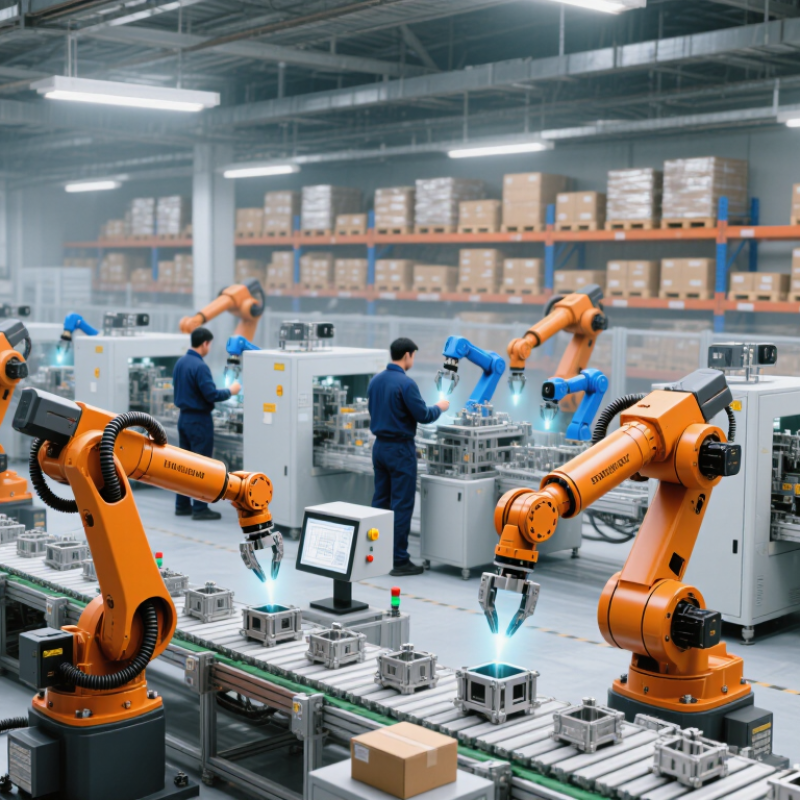
Industrial machinery automation in China spans motion control, sensors, programmable controllers, industrial robots, and production software. These systems coordinate tasks such as cutting, welding, packaging, and material handling. The industry serves factories in automotive, electronics, food processing, and other manufacturing fields. Its scope includes new automated lines and upgrades to existing equipment.
Automation can improve repeatability and help teams track downtime, energy use, and output. But results depend on the process, worker training, and maintenance—not just the equipment. A retrofit may suit a stable production line, while frequent product changes may require more flexible tooling. Small details matter. A poorly placed sensor can trigger repeated stops. Some performance figures are also hard to compare across factories, so site-level checks remain important.
Tips: Before choosing a system, map one production step and record cycle time, defects, and stoppages. Check whether operators can access spare parts and technical support. Keep the first upgrade focused. A clean dashboard does not fix a badly designed workflow, and that is easy to overlook.
Annual installations of industrial robots, 2019–2023
China installed 276,288 industrial robots in 2023. Annual installations indicate the scale and pace of factory automation, but do not represent the entire industrial machinery automation market. Source: International Federation of Robotics, World Robotics 2024.
Leading automation companies should be assessed by measurable factory outcomes, not polished demonstrations. The International Federation of Robotics’ World Robotics 2024 report records 276,288 industrial robots installed in China in 2023, representing 51% of global installations. IFR also reports China’s manufacturing robot density reached 470 units per 10,000 employees. These figures show a large, mature market, but installation volume alone does not prove dependable engineering.
A useful assessment checks cycle-time stability, positioning accuracy, uptime, and integration with existing machines. Ask for acceptance-test records and maintenance intervals. Look closely at a real production cell: cable routing, guarding, changeover steps, and recovery after a fault reveal practical design quality. Safety documentation and operator training matter, too. Spare-part availability and local service response can determine whether a line restarts in hours or days. No scorecard is perfect. Vendor-reported savings may use different baselines, so request comparable data from similar workloads. Interoperability deserves scrutiny; a system that performs well alone may still create costly integration work. Industry data helps set context, while verified results on the factory floor should carry greater weight.
This framework compares companies using verifiable evidence rather than unsupported rankings. No company-specific figures are included. Apply the same reporting period and definitions to every candidate; set weights according to the intended application.
| Evaluation criterion | Measurable indicators | Evidence to verify | Assessment guidance |
|---|---|---|---|
| Product and solution breadth | Product categories, application coverage, and availability of complete automation or system-integration solutions. | Published product specifications, technical manuals, project documentation, and independently verifiable customer references. | Check whether products address the target process and can work together; count only documented capabilities. |
| Research and development capability | Annual R&D expenditure, R&D expenditure as a share of operating revenue, and technical staff as a share of employees. | Audited financial statements, prospectuses where applicable, and official company disclosures. | Compare figures from the same financial year and use consistent accounting definitions; do not treat spending alone as proof of product performance. |
| Intellectual property and innovation | Granted invention patents, active patent families, software copyrights, and documented product releases. | Patent-office records and dated product or technical announcements. | Separate granted patents from applications, remove duplicate family filings where possible, and assess relevance to industrial automation. |
| Smart manufacturing maturity | Documented maturity assessment covering planning, production, equipment, operations, and data integration. | Assessment records prepared with reference to China’s GB/T 39116-2020 and GB/T 39117-2020 standards, where applicable. | Verify the assessment scope, date, and assessor; distinguish a formal assessment from a self-reported claim. |
| Quality and process control | Quality-system certification status, product testing records, warranty terms, and disclosed quality or recall information. | Valid certificate records, inspection reports, product documentation, and public regulatory notices. | Check certificate scope, issuing body, and validity dates; a certificate does not by itself establish product reliability. |
| Delivery and installed-base support | Documented project deliveries, commissioning capability, service locations, spare-parts availability, and stated response arrangements. | Project acceptance documents, service policies, reference checks, and support coverage information. | Evaluate support in the customer’s operating region and confirm service commitments in writing. |
| Financial resilience | Revenue trend, operating cash flow, profitability, liabilities, and disclosed dependence on major customers. | Audited annual financial statements and official disclosures for multiple reporting periods. | Review trends rather than a single year and account for differences in company size and business model. |
| Industry and application experience | Verified projects across relevant manufacturing processes, production environments, and application sectors. | Customer-approved case studies, acceptance records, and references that can be checked independently. | Give greater weight to experience with comparable process requirements, operating conditions, and production scale. |
| Interoperability and integration | Documented communication interfaces, supported data formats, integration options, and compatibility test results. | Technical manuals, interface specifications, system architecture documents, and project integration tests. | Confirm compatibility with the buyer’s existing equipment and information systems; verify performance in the intended configuration. |
| Safety, compliance, and cybersecurity | Applicable product conformity records, machine risk assessments, safety documentation, and disclosed cybersecurity controls. | Declarations and test reports relevant to the product and destination market, plus technical and security documentation. | Confirm that evidence applies to the exact product configuration and intended use; check local legal and site requirements. |
Suggested use: record the source, reporting period, and verification status for every indicator before scoring. Any “top 10” ranking should state its weighting method and should not imply that unverified estimates are factual.
Top 10 Industrial Machinery Automation Companies in China
Profiles of Ten Notable Chinese Automation Companies
These ten profiles focus on different capabilities, not a verified ranking. One company may specialize in programmable controllers, helping factories coordinate conveyor belts, pumps, and safety interlocks. Another builds servo drives and motion systems for precise positioning on machine tools. A machine-vision provider may inspect bottle caps or metal parts under fixed lighting. Small details matter. Results depend on setup.
A robotics-focused firm might supply articulated arms for palletizing, welding, or material handling. A sensor maker can provide proximity and temperature devices for harsh production floors. Another company may develop industrial software that tracks machine status and downtime. Packaging specialists connect filling, sealing, and labeling equipment into a working line. Their value is often measured in fewer stoppages, not impressive brochures.
The remaining profiles include process-control suppliers for chemical and energy facilities, machine-tool automation developers, and system integrators serving factories with mixed equipment. Integrators often handle wiring, commissioning, and operator training, which can reveal issues missed during design. Yet “automation” covers very different work. Buyers should verify references, service coverage, spare-parts access, and performance under real production conditions. A polished demonstration is useful, but it is not the whole story.
China’s industrial machinery automation sector covers motion control, robotics, machine vision, and factory software. Across leading suppliers, common products include programmable controllers, servo drives, industrial robots, sensors, and human-machine interfaces. These components coordinate tasks such as positioning, inspection, and material handling.
In machining plants, servo systems can guide cutting tools along precise paths, while vision cameras check dimensions or surface defects. Packaging lines use conveyors, robotic arms, and sensors to sort products and detect jams. In automotive production, automated cells support welding, assembly, and parts transfer. The exact mix depends on cycle time, payload, accuracy, and how easily equipment connects with existing machines.
Connectivity is a key technology. Industrial networks link controllers, drives, and monitoring software, allowing operators to track alarms and production data. Predictive maintenance tools can flag unusual vibration or rising motor temperatures. Useful, but not magic. Poor sensor placement or incomplete machine data can produce misleading alerts. Buyers should examine integration support, spare-parts availability, safety functions, and service response times. A polished demonstration may hide difficult commissioning work, and that deserves closer scrutiny.
China’s industrial automation sector is evolving through smarter controls, connected equipment, and more flexible production lines. Manufacturers are seeking systems that can adjust quickly when product designs or order volumes change. Sensors now help operators track vibration, temperature, and cycle times on the factory floor. These details can reveal maintenance needs before a machine stops. That matters.
Market development is not uniform. Large facilities may have teams and budgets for complex integration, while smaller factories often need simpler upgrades. Retrofitting older equipment can be costly and technically awkward. The benefits also depend on reliable data and staff training, not just new hardware. Progress can be uneven.
Tips: Before upgrading, map one production bottleneck, such as repeated manual checks or unplanned stoppages. Test a limited automation project first. Record downtime, output quality, and maintenance effort before and after installation. Keep operators involved; they often spot practical problems that planning documents miss.
Future trends include wider use of industrial data platforms, machine vision, and collaborative robots for repetitive tasks. Demand for energy-efficient equipment may also shape investment decisions. However, forecasts should be treated carefully: technologies do not deliver the same value in every plant. Companies comparing automation suppliers should examine integration support, spare-parts access, training, and measurable performance—not just headline features. A useful system is one workers can maintain and managers can evaluate over time.