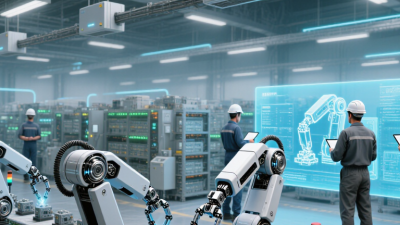


China has become a major source of intelligent manufacturing systems for factories seeking higher efficiency, traceability, and production flexibility. Yet, identifying the “best” manufacturer requires more than comparing software features or equipment prices. A reliable evaluation should examine factory experience, system integration skills, industry references, service capacity, and measurable results. Look for suppliers that can connect robots, sensors, manufacturing execution systems, warehouse platforms, and quality-control tools within one practical workflow. Details matter. A strong solution should show live production data, clear alarm records, and visible energy consumption at the operator’s workstation.
Evidence should guide the shortlist. Review audited case studies, relevant certifications, documented deployment timelines, and customer references from similar industries. Manufacturers with experienced engineering teams can explain how they manage legacy equipment, operator training, data security, and future upgrades. They should also describe maintenance response times, spare-parts availability, and total ownership costs without hiding limitations. That honesty builds trust. No system fits every factory. A supplier may excel in automotive production but struggle with food processing or small-batch manufacturing. This is where careful site visits and pilot projects become valuable. The assessment should remain balanced, because impressive demonstrations may not reflect daily factory conditions. Practical performance matters more. By comparing proven capabilities, technical support, customization depth, and long-term reliability, buyers can identify China’s most suitable intelligent manufacturing systems manufacturers for their specific goals.
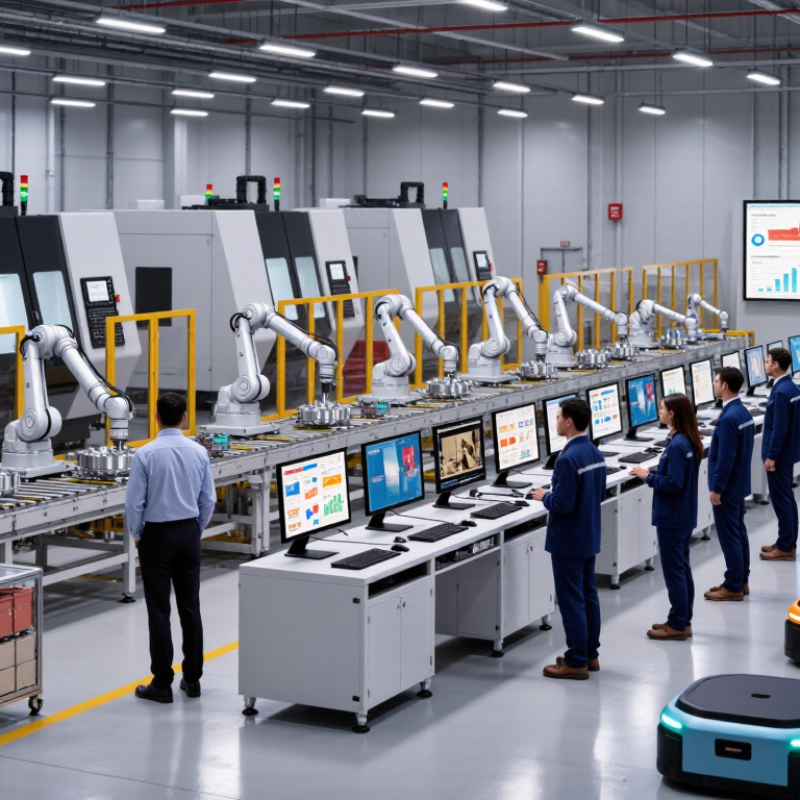
Intelligent manufacturing systems connect machines, software, materials, and people through real-time data. Sensors capture temperature, vibration, pressure, and energy use. Control systems then send this information to manufacturing execution platforms, analytics tools, and enterprise planning software. The result is a production environment that can detect abnormalities, adjust processes, and support faster decisions.
This is more than factory automation. An intelligent system combines cyber-physical equipment, industrial networks, artificial intelligence, digital twins, and human supervision. The International Federation of Robotics reported 541,302 industrial robots were installed worldwide in 2023. That figure shows the scale of automation, but robots alone do not create intelligence. Data quality and process discipline matter more than impressive hardware.
Industry evidence is encouraging, although not perfect. Deloitte’s 2024 Smart Manufacturing Survey found that 86% of manufacturing leaders expect smart manufacturing to remain a major competitiveness factor within five years. The World Economic Forum’s Global Lighthouse Network also documents factories achieving improvements in productivity, quality, and energy efficiency through connected technologies. Yet implementation can be uneven. Old equipment may lack usable interfaces, and poorly trained teams can misread accurate data. A practical system therefore needs secure connectivity, clear performance metrics, maintenance expertise, and employees who can challenge automated recommendations. Small gaps remain costly.
Intelligent manufacturing systems connect machines, sensors, software, and people through a shared operational data layer.
A production order becomes a digital route: planning software assigns work, controllers adjust equipment, and sensors report conditions in seconds. This is the operating logic. In a modern line, vibration data can signal tool wear before a visible defect appears. A rules engine may slow production, request inspection, or redirect material. Human technicians still approve unusual decisions.
The International Federation of Robotics reported 541,302 industrial robots installed worldwide in 2023. Its World Robotics 2024 report also recorded about 4.28 million robots operating globally. Those figures show scale, not intelligence. A robot alone cannot optimize a factory. The system needs accurate context, stable connectivity, and clear performance targets. Deloitte’s 2024 Smart Manufacturing and Operations Survey found that 86% of surveyed leaders considered smart manufacturing important for competitiveness within five years. Yet adoption often exposes weak data discipline. Duplicate records and delayed maintenance logs can distort dashboards. That is the uncomfortable part.
Effective operation follows a loop: sense, analyze, decide, act, and verify.
Edge computing handles urgent responses near the machine, while cloud platforms compare production trends across sites. Cybersecurity controls, access limits, and audit trails protect this flow. Still, automation can amplify a bad rule. Human review remains valuable. Manufacturers should test one measurable use case, such as reducing unplanned downtime, before expanding the architecture. Results should be checked against energy use, scrap rates, safety events, and worker feedback. Perfect integration is unlikely. In practice, the control loop is never truly finished.
China Best Intelligent Manufacturing Systems Manufacturers?
Key Technologies Behind Intelligent Manufacturing
Intelligent manufacturing depends on connected machines, reliable data, and fast operational decisions. The International Federation of Robotics reported 541,302 industrial robots were installed worldwide in 2023. China accounted for about 51% of those installations. This scale creates demand for manufacturers that combine robotics, sensors, industrial networks, and production software.
The core technology is not robotics alone. Edge computing processes machine signals near the production line, reducing delays and network pressure. Industrial Internet of Things sensors track temperature, vibration, energy use, and product quality. Digital twins then simulate changes before engineers interrupt production. The World Economic Forum reports that artificial intelligence and information processing technologies remain major forces reshaping manufacturing work. Yet data quality remains a weak point. A dashboard can still mislead operators when sensors drift or machines share inconsistent standards.
Tips: Start with one measurable bottleneck, such as unplanned downtime. Connect critical equipment first. Use cybersecurity controls from the pilot stage. Keep human inspection during early deployment, because automated decisions can miss unusual defects. In practice, successful projects often improve gradually rather than perfectly. Teams should record false alarms, maintenance delays, and operator feedback. These details reveal where the system needs redesign.
| Technology Category | Core Technology | Primary Manufacturing Function | Typical Measurable Indicators | Relevant Standards or Protocols | Common Industrial Applications | Supplier Evaluation Focus |
|---|---|---|---|---|---|---|
| Industrial Connectivity | Industrial Ethernet and Time-Sensitive Networking | Connects controllers, robots, sensors, drives, and edge devices with deterministic data exchange. | Cycle time, network latency, packet loss, synchronization accuracy, and system availability. | OPC UA, MQTT, PROFINET, EtherNet/IP, Modbus TCP, and IEEE 802.1 TSN specifications. | Assembly lines, process cells, machine-to-machine communication, and real-time motion control. | Interoperability, redundancy design, cybersecurity controls, protocol support, and lifecycle maintenance. |
| Industrial Control | PLC, PAC, DCS, and SCADA Integration | Controls production equipment, monitors operating conditions, and coordinates plant-level workflows. | Control response time, alarm response, uptime, data availability, and integration effort. | IEC 61131-3, IEC 62443, OPC UA, ISA-95, and ISA-88. | Discrete manufacturing, chemical processing, food production, utilities, and continuous production lines. | Compatibility with installed equipment, engineering tools, redundancy, diagnostics, and remote support. |
| Robotics and Motion | Industrial Robots, Collaborative Robots, and Servo Systems | Automates handling, welding, machining, packaging, inspection, and repetitive assembly operations. | Repeatability, payload, reach, takt time, positioning accuracy, and mean time between failures. | ISO 10218, ISO/TS 15066, ISO 9283, and IEC 61508-related safety principles. | Material handling, palletizing, welding, screwdriving, machine tending, and surface finishing. | Safety functions, application programming, end-of-arm tooling, changeover time, and service capability. |
| Machine Vision | 2D/3D Vision, Optical Inspection, and Deep-Learning Analysis | Detects dimensional defects, surface faults, missing components, assembly errors, and product orientation. | Detection rate, false-positive rate, image resolution, inspection cycle time, and traceability. | GigE Vision, GenICam, USB3 Vision, ISO 9001 quality practices, and application-specific metrology procedures. | Electronics inspection, packaging verification, automotive components, food sorting, and dimensional measurement. | Lighting design, dataset quality, model explainability, calibration, environmental robustness, and data ownership. |
| Industrial Internet of Things | Sensors, Gateways, Edge Computing, and Device Management | Collects equipment data and converts it into operational, maintenance, quality, and energy insights. | Data completeness, sampling rate, edge-processing delay, device availability, and battery life. | MQTT, OPC UA, CoAP, LoRaWAN, IPv6, and IEC 62443 security practices. | Condition monitoring, energy management, remote equipment supervision, and production data collection. | Sensor accuracy, connectivity options, edge autonomy, firmware management, and secure device onboarding. |
| Manufacturing Software | MES, MOM, APS, and Digital Production Management | Manages production scheduling, work orders, materials, quality records, genealogy, and performance reporting. | Schedule adherence, OEE, first-pass yield, order lead time, inventory accuracy, and electronic record completeness. | ISA-95, ISA-88, OPC UA, ISO 9001, and industry-specific quality requirements. | Production execution, electronic work instructions, batch management, traceability, and capacity planning. | ERP integration, configurable workflows, audit trails, scalability, user adoption, and total cost of ownership. |
| Data and Analytics | Industrial Data Platforms, AI, and Predictive Analytics | Turns historical and real-time production data into forecasts, anomaly alerts, and optimization recommendations. | Forecast accuracy, anomaly-detection precision, model latency, data quality, and avoided downtime. | CRISP-DM practices, OPC UA information models, ISO/IEC 27001 security controls, and applicable AI governance policies. | Predictive maintenance, yield improvement, process optimization, demand forecasting, and root-cause analysis. | Data lineage, model monitoring, explainability, integration with shop-floor systems, and human approval workflows. |
| Digital Twin | Simulation, Virtual Commissioning, and Asset Models | Represents machines, lines, or processes digitally to test layouts, logic, throughput, and maintenance scenarios. | Simulation-to-reality deviation, commissioning time, throughput, utilization, and changeover performance. | ISO 23247 digital-twin framework, OPC UA, AutomationML, and standardized engineering data practices. | Line design, virtual commissioning, production optimization, operator training, and facility planning. | Model fidelity, data synchronization, software interoperability, update procedures, and engineering usability. |
| Quality Management | Closed-Loop Quality Control and Statistical Process Control | Links inspection results with process parameters to prevent defects and support continuous improvement. | First-pass yield, defect rate, process capability, rework rate, scrap rate, and corrective-action closure time. | ISO 9001, ISO 19011, AIAG core tools, SPC methods, and measurement-system-analysis principles. | Automotive parts, electronics, aerospace components, medical devices, and precision machinery. | Measurement traceability, statistical tools, nonconformance workflows, auditability, and integration with MES. |
| Cybersecurity | OT Network Segmentation, Identity Management, and Security Monitoring | Protects operational technology from unauthorized access, malware, data loss, and unsafe control changes. | Patch compliance, incident response time, privileged-access coverage, backup recovery time, and vulnerability closure rate. | IEC 62443, ISO/IEC 27001, NIST Cybersecurity Framework, and network segmentation principles. | Connected factories, remote maintenance, multi-site production networks, and critical manufacturing systems. | Defense-in-depth architecture, offline recovery, access control, asset inventory, supplier risk, and incident response. |
| Sustainability and Energy | Energy Monitoring, Carbon Accounting, and Resource Optimization | Measures electricity, gas, water, compressed air, material consumption, and production-related emissions. | Energy intensity per unit, peak demand, renewable-energy share, water intensity, and carbon emissions. | ISO 50001, ISO 14001, ISO 14064, the GHG Protocol, and relevant energy-metering practices. | Energy-intensive plants, smart utilities, carbon reporting, equipment optimization, and green-factory programs. | Metering granularity, data verification, reporting scope, optimization algorithms, and measurable payback. |
| Implementation and Support | System Integration, Training, and Lifecycle Services | Ensures that hardware, software, production processes, personnel, and maintenance practices operate as one system. | Project schedule adherence, training completion, changeover time, support response, and return on investment. | ISO 9001, ISO 20000-1, IEC 62443, ISA-95, and documented validation procedures. | Greenfield factories, brownfield upgrades, multi-site standardization, and continuous-improvement programs. | Local engineering capability, documentation quality, spare-parts planning, upgrade policy, training, and service-level agreements. |
Finding China’s best intelligent manufacturing system manufacturer requires evidence, not catalogue claims. In plant assessments, I examine one production cell before reviewing the whole platform. Can it connect PLCs, sensors, MES, and quality records without fragile custom code? The International Federation of Robotics reported 541,302 industrial robots were installed worldwide in 2023. For Chinese manufacturers, this creates a practical test: can the supplier support uptime, maintenance, and safe integration?
Use measurable criteria. Request 12-month uptime, mean time to repair, first-pass yield, and energy data from comparable factories. Deloitte’s 2024 Smart Manufacturing Survey found that 86% of manufacturers consider smart manufacturing important to competitiveness within five years. Interest is high. Execution varies. Ask for a live demonstration using your sample data, not a prepared dashboard. Check cybersecurity controls against recognized frameworks, including role-based access, audit logs, patch procedures, and recovery tests. NIST CSF 2.0 provides a reliable reference.
Supplier capability also depends on people. Interview the proposed project manager and local service engineers. Review training records, escalation times, spare-part planning, and change-control documents. A factory visit can reveal cable labeling, sensor placement, and whether operators use alerts. Do not overvalue artificial intelligence claims. A simple alarm preventing one rejected batch may beat an impressive prediction model. No audit is perfect. Short pilots can miss seasonal loads and hidden integration costs. Require staged acceptance tests, transparent assumptions, and references you can contact directly. The strongest manufacturer proves repeatable results and explains failures.
China Best Intelligent Manufacturing Systems Manufacturers?
Leading Applications Across Modern Industries
Intelligent manufacturing systems connect machines, workers, data, and decisions across modern production sites. In automotive plants, vision cameras inspect welds while sensors track torque, temperature, and cycle time. Engineers can identify drift before a rejected batch reaches final inspection. This practical visibility improves consistency, but it requires disciplined data collection. Poorly calibrated sensors still create confident mistakes. That weakness deserves attention.
In electronics factories, automated systems coordinate soldering, component placement, and microscopic quality checks. Real-time dashboards help supervisors adjust production when humidity affects sensitive materials. Food processors use traceability tools to record temperatures, batch movements, and cleaning events. Warehouses apply robotics and intelligent scheduling to reduce walking time and misplaced inventory. Energy facilities monitor vibration, pressure, and power consumption around the clock. Small warnings matter.
Reliable manufacturers usually provide integration testing, operator training, cybersecurity controls, and long-term maintenance. They should explain how systems exchange data with existing equipment. Clear audit trails also support safer decisions and stronger process accountability. However, automation does not remove every human error. Workers may ignore alerts when screens produce too many warnings. Managers may also measure speed while overlooking maintenance quality. Practical trials, independent verification, and honest performance limits are essential before broad deployment.
China’s Intelligent Manufacturing Growth
China’s industrial robot output increased substantially from 2020 to 2024, supporting intelligent manufacturing applications in automotive production, electronics assembly, metal processing, logistics, food and beverage, pharmaceuticals, and precision machinery. The figures represent annual industrial robot output in China, measured in units.
Source: National Bureau of Statistics of China; annual industrial robot production data.