What Are the Best Smart Manufacturing Systems in China?

China has moved from isolated factory automation toward connected, data-driven production. This shift makes smart manufacturing systems central to industrial competitiveness. The International Federation of Robotics reported 276,288 industrial robots were installed in China in 2023. That represented 51% of global installations. These figures show scale, but scale alone does not prove manufacturing intelligence.

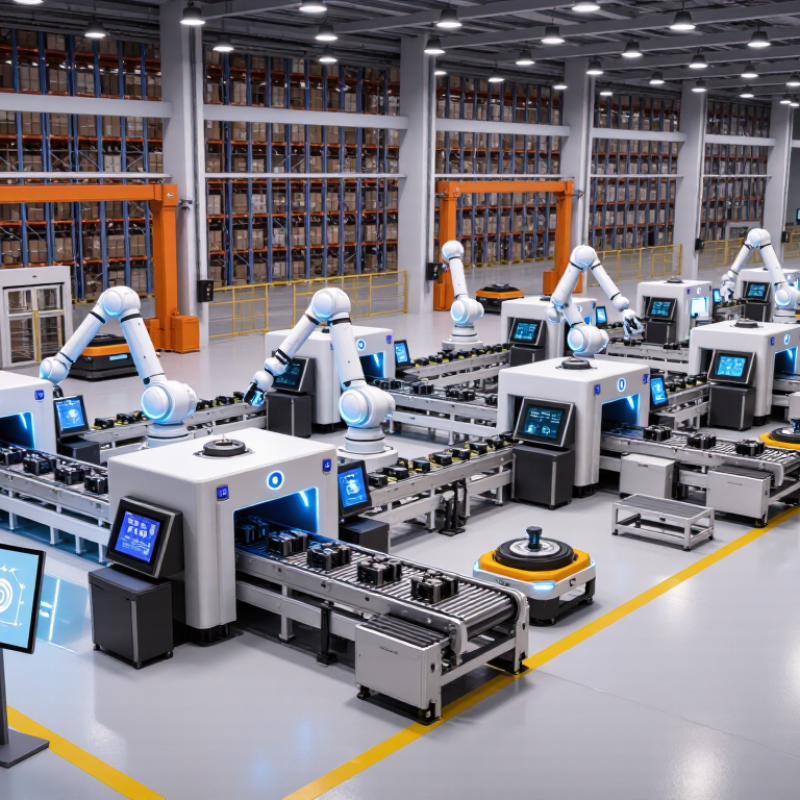
This guide examines leading smart manufacturing systems through practical criteria. These include production visibility, machine connectivity, cybersecurity, digital twins, quality control, and return on investment. The Ministry of Industry and Information Technology reported 421 national-level smart manufacturing demonstration factories by 2023. Many combine industrial robots, manufacturing execution systems, warehouse automation, and artificial intelligence. A factory floor may show the difference clearly: sensors capture vibration, dashboards flag abnormal energy use, and operators respond before defects spread.

Performance still depends on context. A system designed for automotive stamping may not suit pharmaceuticals, electronics, or food processing. The World Economic Forum’s Global Lighthouse Network highlights factories that achieve measurable improvements in productivity, quality, sustainability, or workforce capability. However, lighthouse examples are not universal templates. Costs, legacy equipment, supplier support, and data standards can change the result. That is the uncomfortable part.

The best smart manufacturing systems in China should therefore be judged by verified outcomes, not impressive interfaces. This article compares major platforms and solution types using industry reports, documented factory cases, and implementation realities. Readers should treat rankings as a starting point. Even strong systems require disciplined integration, skilled employees, and continuous review. Technology helps. Management still decides.

What Are the Best Smart Manufacturing Systems in China?

Definition and Core Features of Smart Manufacturing Systems

Smart manufacturing systems in China connect machines, workers, materials, and management through digital technologies. Their purpose is not simple automation. They create reliable information for faster, safer, and more flexible production.

A core system usually combines sensors, industrial software, data platforms, and machine controls. Sensors may track temperature, vibration, pressure, or energy use on a production line. Supervisors can then identify abnormal patterns before equipment fails. Real-time dashboards improve visibility, while traceability records show when each product was processed. Flexible scheduling also helps factories respond to changing orders. Yet, the term “smart” is sometimes used too loosely. A factory with many screens is not necessarily intelligent. Data quality, system integration, cybersecurity, and trained employees matter more than appearance.

Tips: Begin with one measurable problem, such as repeated downtime or material waste. Check whether existing machines can share accurate data. Keep human approval for critical decisions. Review results monthly, because early predictions may be incomplete. A practical pilot often reveals hidden issues, including unstable sensors, unclear responsibilities, and staff resistance.

Leading Smart Manufacturing Systems Developed in China

What Are the Best Smart Manufacturing Systems in China?

Leading Smart Manufacturing Systems Developed in China

China’s leading smart manufacturing systems connect machines, workers, materials, and production data. They often combine manufacturing execution software, industrial internet platforms, digital twins, and artificial intelligence. In practical factory assessments, the strongest systems connect directly with shop-floor equipment. That connection matters. A machine alarm can trigger a maintenance task, update production schedules, and notify a supervisor within seconds.

Many systems developed in China are designed for large, fast-moving factories. Edge computing reduces delays near production lines. Machine vision checks surface defects under stable lighting. Automated guided vehicles move components between storage areas and assembly stations. Energy management modules also track electricity, compressed air, and water usage. These details help managers control waste without relying only on monthly reports.

No system is flawless. Some pilot projects look impressive but struggle with older machines, inconsistent data, or limited employee training. A reliable evaluation should test cybersecurity, data accuracy, maintenance support, and integration costs. Human experience remains essential. Engineers must understand why a sensor fails, not merely read its dashboard. Systems should also allow gradual deployment, because replacing every process at once can create unnecessary risk. Performance improves when operators can question the software and correct its assumptions.

What Are the Best Smart Manufacturing Systems in China? — Leading Smart Manufacturing Systems Developed in China
System Category Primary Manufacturing Function Typical Chinese Industrial Applications Core Data Scope Real-Time Capability Key Performance Indicators Integration Level Best-Fit Production Environment Evaluation Priority
Manufacturing Execution System (MES) Coordinates production orders, work instructions, traceability, labor, equipment status, and quality records between enterprise planning and the shop floor. Automotive Electronics Machinery Pharmaceuticals Work orders, routing, material genealogy, operator records, process parameters, nonconformities, and production status. Near real time; commonly connected to production equipment, barcode or RFID devices, sensors, and industrial databases. OEE, schedule adherence, first-pass yield, work-in-process, cycle time, and traceability completeness. High; links ERP, PLM, QMS, WMS, SCADA, and industrial equipment. Discrete, batch, and regulated manufacturing with multiple production stages. ★★★★★
Essential for production visibility and end-to-end traceability.
Advanced Planning and Scheduling (APS) Creates finite-capacity production schedules while balancing demand, materials, equipment, labor, tooling, and delivery constraints. Multi-plant Production Make-to-order Complex Assembly Orders, bills of materials, routings, capacity calendars, constraints, inventory, lead times, and delivery priorities. Planning is usually event-driven or periodic; schedule updates can be triggered by disruptions or new orders. On-time delivery, schedule stability, capacity utilization, setup time, lead time, and inventory turnover. High; normally connected with ERP, MES, supply-chain planning, and warehouse systems. High-mix, low-volume, make-to-order, and capacity-constrained operations. ★★★★★
Strongest value where production constraints and delivery commitments are complex.
Industrial Internet of Things (IIoT) Platform Collects, normalizes, manages, and analyzes equipment and process data across factories and production lines. Industrial Equipment Steel Energy Process Industries Sensor measurements, machine states, alarms, operating parameters, energy consumption, and maintenance events. Milliseconds to seconds, depending on sensor, network, gateway, and application requirements. Data availability, equipment utilization, alarm response time, downtime, energy intensity, and predictive-maintenance precision. Very high; supports edge computing, cloud services, digital twins, analytics, and industrial applications. Asset-intensive plants with heterogeneous equipment and large volumes of operational data. ★★★★★
Best foundation for scalable equipment connectivity and cross-site analytics.
Supervisory Control and Data Acquisition (SCADA) Monitors industrial processes, displays operating conditions, records alarms, and supports supervisory control. Utilities Chemicals Water Treatment Continuous Processing Process variables, equipment states, alarms, trends, control commands, and historical time-series data. Real time; commonly supports second-level or sub-second monitoring depending on the control architecture. Alarm response, process stability, availability, control-loop performance, and unplanned downtime. High at the operational technology level; typically connects PLCs, RTUs, historians, MES, and IIoT platforms. Continuous and highly automated production processes requiring centralized monitoring. ★★★★★
Critical for operational visibility, process stability, and safe plant supervision.
Digital Twin and Simulation System Creates a virtual representation of products, equipment, production lines, or factories for design, commissioning, optimization, and predictive analysis. Aerospace Automotive Robotics Complex Equipment Design models, asset structures, process parameters, sensor streams, simulation scenarios, and historical operating data. Offline, near real time, or real time, depending on model complexity and data connectivity. Commissioning time, engineering-change impact, throughput, bottleneck utilization, failure prediction, and model accuracy. Very high; commonly integrates PLM, CAD, MES, IIoT, simulation, and analytics systems. Complex products and production systems where testing physical changes is costly or risky. ★★★★☆
Most valuable for complex engineering, virtual commissioning, and optimization.
Quality Management System (QMS) Controls inspection plans, nonconformance handling, corrective actions, supplier quality, audits, and product genealogy. Automotive Medical Devices Food Electronics Inspection results, laboratory data, defect codes, supplier records, corrective actions, audit evidence, and certificates. Near real time for shop-floor quality events; laboratory and audit information may be event-based. First-pass yield, defect rate, cost of poor quality, complaint closure time, capability index, and audit findings. High; connects with MES, ERP, laboratory systems, supplier portals, and equipment inspection devices. Regulated, traceability-intensive, and quality-sensitive manufacturing. ★★★★★
Essential where compliance, defect prevention, and product genealogy are priorities.
Warehouse Management and Intralogistics System Manages receiving, storage, picking, line-side supply, inventory accuracy, and automated material movement. Automotive E-commerce Manufacturing Consumer Goods Electronics Material identities, locations, quantities, batch numbers, storage conditions, picking tasks, and transport status. Near real time through barcode, RFID, machine vision, conveyors, robots, and automated storage systems. Inventory accuracy, picking accuracy, dock-to-stock time, order cycle time, space utilization, and line-side shortages. High; integrates ERP, MES, transportation systems, robots, conveyors, and automated storage equipment. Factories with high material variety, frequent movements, or automated logistics requirements. ★★★★☆
Best for improving material visibility, warehouse accuracy, and production continuity.
Energy Management and Carbon Monitoring System Measures, analyzes, and optimizes electricity, gas, steam, compressed air, water, and production-related emissions. Steel Cement Chemicals Data Centers Meter readings, equipment energy consumption, production output, utility demand, energy costs, and emissions factors. Seconds to minutes for operational monitoring; reporting and carbon accounting may be periodic. Energy intensity, peak demand, specific consumption, utility cost per unit, renewable-energy share, and emissions intensity. High; connects meters, SCADA, IIoT platforms, MES, finance, and sustainability reporting systems. Energy-intensive plants and factories with defined energy or carbon-reduction targets. ★★★★☆
High priority for energy-intensive operations and measurable carbon reduction.
Artificial Intelligence-Based Predictive Maintenance System Identifies abnormal equipment behavior and estimates failure risk to support condition-based maintenance. Power Equipment Machinery Mining Transportation Equipment Vibration, temperature, current, pressure, operating cycles, maintenance history, alarms, and failure labels. Near real time or real time for anomaly detection; prediction horizons vary by asset and failure mode. Mean time between failures, unplanned downtime, maintenance cost, false-alarm rate, precision, and recall. High; integrates with IIoT, SCADA, asset management, maintenance scheduling, and spare-parts systems. Critical assets with measurable degradation patterns and sufficient historical operating data. ★★★★☆
Most effective when asset data quality and failure history are reliable.
Industrial Robotics and Flexible Automation System Automates handling, welding, assembly, inspection, packaging, palletizing, and other repetitive or hazardous operations. Automotive Metal Fabrication Electronics Logistics Robot programs, motion data, task completion, cycle time, safety status, machine vision results, and production counts. Real time for motion and safety control; production data is generally available at line or station level. Cycle time, utilization, changeover time, defect rate, labor productivity, safety incidents, and throughput. High; connects robots, PLCs, machine vision, MES, safety systems, and digital-twin models. Repetitive, hazardous, precision-sensitive, or labor-intensive processes with stable task definitions. ★★★★☆
Strongest value when standardized processes support repeatable automated operations.
Assessment basis: the system categories and capabilities are aligned with common smart-manufacturing architecture practices and the capability-maturity concepts described in China’s smart-manufacturing standards, including GB/T 39116-2020 and GB/T 39117-2020. Actual performance depends on production scale, equipment connectivity, data quality, cybersecurity controls, process complexity, and implementation maturity.

Key Technologies Behind China’s Smart Manufacturing Platforms

China’s smart manufacturing platforms increasingly connect machines, workers, materials, and energy data in one operational layer. The International Federation of Robotics reported 276,288 industrial robot installations in China during 2023, representing 51% of global installations. This scale creates strong demand for reliable industrial software, not only faster robots.

The key technologies begin with industrial internet platforms and edge computing. Sensors capture vibration, temperature, pressure, and production speed beside the machine. Edge systems then detect abnormal patterns without sending every signal to the cloud. Digital twins can simulate a production line before engineers change its layout. Machine vision also checks surface defects within milliseconds, while 5G supports flexible equipment and mobile robots. China’s Ministry of Industry and Information Technology has reported rapid growth in smart factories, with thousands of facilities adopting connected equipment and data-driven processes.

Artificial intelligence adds prediction, but it is not magic. Poor data still produces poor maintenance decisions. Cybersecurity, identity control, and industrial network segmentation therefore matter as much as algorithms. Interoperability remains a practical weakness because older machines often use incompatible protocols. The 2024 World Robotics report also shows China’s robot density reached 470 robots per 10,000 manufacturing employees in 2023. That figure signals progress, yet factories still need skilled technicians, clear data ownership, and disciplined human oversight. More automation does not automatically mean better manufacturing.

What Are the Best Smart Manufacturing Systems in China?

Key Technologies Behind China’s Smart Manufacturing Platforms

China’s smart manufacturing platforms are built around industrial connectivity, digital engineering, numerical control, real-time production data, artificial intelligence, digital twins, and integrated manufacturing management systems. The indicators below show the national adoption level of two important technology foundations in 2023.

Source: China Ministry of Industry and Information Technology, 2023 manufacturing digitalization indicators. The figures represent national adoption rates rather than company or brand performance.

Industry Applications and Deployment Models in China

What Are the Best Smart Manufacturing Systems in China?

Industry Applications and Deployment Models in China

China’s strongest smart manufacturing systems combine industrial connectivity, machine vision, robotics, and real-time production analytics. The International Federation of Robotics reported 276,288 industrial robot installations in China during 2023. That represented about 51% of global installations. These systems support automotive assembly, electronics inspection, metal processing, food production, and chemical operations. A typical electronics line may use cameras for defect detection, edge computers for rapid decisions, and dashboards for energy monitoring. The technology is impressive, but integration quality still varies between factories.

Deployment models depend heavily on factory age and operational risk. Greenfield plants can design data networks, sensors, and automated logistics from the beginning. Brownfield factories usually need phased upgrades, starting with one workshop or bottleneck process. Cloud platforms suit multi-site reporting, while edge systems protect response speed near machines. The Ministry of Industry and Information Technology has reported thousands of digital workshops and smart factories across China. However, published figures often measure adoption, not long-term business value. Managers should question whether higher connectivity actually improves yield, safety, or maintenance costs.

Tips: Begin with a measurable production problem. Track downtime, scrap rates, energy use, and training time before expansion. Use open interfaces where possible. Protect operational data with clear access controls and local cybersecurity reviews. A pilot may fail for ordinary reasons, such as poor sensor placement or incomplete operator training. That failure can reveal more than a polished demonstration.

Criteria for Evaluating Smart Manufacturing Systems in China

Evaluating smart manufacturing systems in China requires more than counting robots or connected machines. The China Ministry of Industry and Information Technology reported over 10,000 smart factories by 2024. However, adoption alone does not prove operational value. The better question is whether a system improves quality, flexibility, safety, and energy performance.

Measure the floor. Start with data interoperability across production, warehouse, quality, and maintenance systems. Interfaces should support recognized industrial standards and preserve traceability from raw material to finished product. The system should also provide real-time indicators, including overall equipment effectiveness, defect rates, changeover time, downtime, and energy consumed per unit. The International Federation of Robotics reported 276,288 industrial robot installations in China during 2023, representing about 51% of global installations. This scale makes integration and cybersecurity essential evaluation criteria.

Human usability deserves equal attention. Operators should understand alarms quickly, while engineers should adjust workflows without constant external assistance. Assess training time, system uptime, recovery procedures, data ownership, and total lifecycle cost. China’s smart manufacturing capability maturity framework offers a useful reference for judging development levels, but maturity scores can remain too abstract. Data can mislead. A factory may display impressive dashboards while workers still rely on spreadsheets and manual checks. Independent audits, pilot testing, and interviews with shop-floor users provide stronger evidence than promotional performance claims.