How to Choose the Right Advanced Manufacturing Technology?

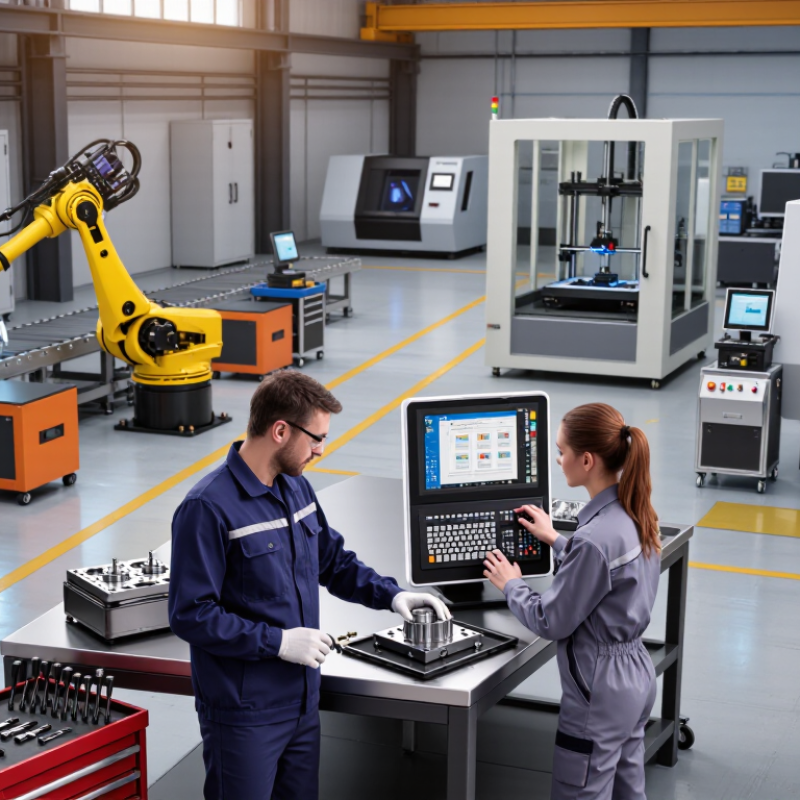
Choosing the right advanced manufacturing technology is rarely about selecting the newest machine. It is about matching capabilities with business reality. A factory may need faster production, tighter tolerances, lower waste, or greater design freedom. Those goals require different solutions.

MIT Professor John Hart has warned, “3D printing is not a magic bullet.” His point applies across advanced manufacturing technology. Additive manufacturing can create complex internal channels, but it may struggle with surface finishing or high-volume output. CNC machining can deliver excellent accuracy, yet material waste and cycle time may increase. Robotics can improve repeatability, but integration costs and worker training still matter.

Look closely at the production floor. Measure actual cycle times. Record rejected parts. Check whether operators lose minutes searching for tools or adjusting fixtures. These details often reveal more than a technology brochure.

A useful evaluation should examine production volume, material requirements, tolerance levels, maintenance support, software compatibility, and total ownership cost. A pilot project can expose hidden limitations before a major investment. For example, producing 500 test components may reveal inconsistent cooling, difficult inspection, or slow post-processing.

Experience matters here. A supplier’s demonstration is not the same as reliable factory performance. Ask for documented case studies, service response times, training plans, and measurable results. Speak with engineers who operate similar systems.

There is no perfect choice.

Even experienced teams misjudge adoption speed. I would question any recommendation that promises immediate savings without discussing integration risks. The strongest decision combines technical evidence, operator feedback, and a realistic view of future production needs.
How to Choose the Right Advanced Manufacturing Technology?

Define the Production Goals and Operating Requirements

Choosing advanced manufacturing technology starts with production goals, not impressive specifications. Define the target output, acceptable variation, material behavior, and delivery schedule. An aerospace fixture, for example, may need repeatable micron-level accuracy, while a custom housing may prioritize flexible changeovers. Write these requirements before comparing equipment. Then record operating realities: floor space, power limits, operator skills, maintenance access, and safety controls. Include the cost of downtime. Real production rarely matches the brochure. That gap deserves attention.

Tips: Turn each goal into a measurable requirement. Set acceptable cycle time, defect rate, setup time, and energy use. Ask operators to review the list, because they notice practical obstacles early. Request sample parts or a controlled trial before making a major investment. Measure results across several production runs, not one perfect demonstration.

A reliable decision also considers future workload. Will product variations increase? Can the process handle different materials without lengthy adjustments? Check training needs, spare-part availability, data security, and inspection methods. Experienced teams often discover that integration takes longer than expected. I have seen technically capable processes struggle because material handling was overlooked. That is an uncomfortable lesson, but a useful one. Document assumptions, test the weakest point, and revise the requirements when evidence challenges the original plan.

Compare Advanced Manufacturing Technologies and Their Capabilities

Choosing the right advanced manufacturing technology starts with comparing capabilities, not chasing novelty. Each process solves a different production problem. CNC machining offers tight tolerances, strong surface quality, and predictable results for metal parts. It suits functional components with established designs and moderate production volumes. However, complex internal channels may require several setups and increase machining time.

Additive manufacturing creates shapes that conventional tools cannot easily reach. It is valuable for lightweight structures, customized parts, and rapid design changes. Its limits include slower production for large batches, variable surface texture, and additional finishing work. Material extrusion, powder-based systems, and metal deposition also differ in strength, accuracy, and part size. The process choice must match the material and the final use.

Robotic manufacturing improves repeatability and handles demanding tasks, such as welding, cutting, and material placement. Vision systems can support inspection, but they cannot correct every process error. Automation may reduce labor pressure, yet programming and maintenance require skilled technicians. Digital simulation can expose collisions and cycle-time problems before production begins. It is useful, but real factory conditions still create surprises. In one comparison, a faster process produced more defects because thermal control was overlooked. That lesson matters. Evaluate tolerance, throughput, material behavior, energy use, inspection needs, and operator expertise together. A technology with impressive specifications may perform poorly when its capabilities do not fit the actual workflow.

How to Choose the Right Advanced Manufacturing Technology?

Comparative capability index from 1 (low) to 5 (high), based on typical process characteristics. Actual performance depends on material, machine, tooling, design, and production conditions.

Additive manufacturing is strongest for complex geometries and rapid design changes, CNC machining offers high precision and broad material compatibility, injection molding is most effective for high-volume production, and sheet metal fabrication provides efficient forming for thin-walled parts.

Evaluate Costs, Materials, Quality, and Scalability

Choosing advanced manufacturing technology starts with the part, not the machine’s impressive specifications. In production trials, teams often underestimate setup time, operator training, and inspection costs. A lower purchase price can hide expensive tooling, software, maintenance, and material waste. Request a total-cost estimate for the initial three years. Include energy use, rejected parts, calibration, and downtime. Ask suppliers to show their assumptions in writing. Numbers need context.

Material behavior should guide the process choice. A heat-sensitive polymer may warp near thin walls, while a metal alloy can require controlled cooling. Test the exact material grade, not a similar sample. Examine surface roughness, dimensional drift, porosity, and strength after finishing. Use parts from several production days. One perfect sample proves very little. Quality also depends on measurement methods. Define tolerances, inspection frequency, and acceptance criteria before the pilot. An independent review can expose optimistic claims, although it may slow decisions.

Scalability means more than making one part quickly. Measure cycle time across small batches, then repeat the test after tool changes and shift handovers. Check whether trained staff can maintain consistent results. Plan for material availability, spare parts, data security, and process documentation. A technology may work beautifully at 100 units but struggle at 10,000. That gap matters. I would leave room for revision. Early forecasts are often too confident. Build a staged investment plan, with clear evidence required before each expansion.

Assess Workforce, Infrastructure, and Integration Needs

Choosing advanced manufacturing technology starts with people, not machines. Assess operators, maintenance technicians, engineers, and supervisors before reviewing equipment specifications. The World Economic Forum’s Future of Jobs Report 2023 estimates that 44% of workers’ skills may be disrupted within five years. It also reports that 60% of workers will need training before 2027. Skills come first.

Map each critical task on the shop floor. Can employees interpret sensor alerts, adjust process parameters, and recover from downtime? A practical trial can reveal more than a polished demonstration. Include night-shift staff and newer operators. Their feedback may expose training gaps that senior teams overlook. The assessment may feel uncomfortable. That is useful.

Infrastructure determines whether the technology performs consistently. Check network capacity, data quality, cybersecurity controls, power stability, floor space, and environmental conditions. The International Society of Automation notes that legacy systems often create integration barriers through incompatible protocols and isolated data. Interfaces matter. Define how production, quality, maintenance, and inventory systems will exchange information.

Begin with one measurable workflow, such as reducing changeover time or detecting defects earlier. Track baseline results for several weeks. Deloitte’s 2023 Smart Manufacturing and Operations Survey found that 86% of manufacturing leaders viewed smart manufacturing as a primary competitiveness driver over the next five years. Yet ambition does not replace readiness. Test the weak link.

Select and Validate the Best-Fit Manufacturing Solution

Choosing advanced manufacturing technology starts with the process, not the equipment. Map cycle time, tolerance, material flow, operator skill, and maintenance access. A useful shortlist needs measurable gates: throughput, first-pass yield, energy use, changeover time, and total cost. The International Federation of Robotics reported 541,302 industrial robots installed worldwide in 2023, the second-highest annual total recorded. Adoption is growing, but popularity does not prove suitability.

Validate the solution using representative parts, materials, tooling, operators, and inspection methods. Run controlled pilot batches. Record scrap, downtime, dimensional drift, recovery time, and training hours. Do not trust demo conditions. Deloitte’s 2023 Smart Manufacturing and Operations Survey found that 86% of manufacturing executives viewed smart manufacturing as a key competitiveness driver within five years. That finding supports investment, not automatic approval.

The first scoring model may overweight speed. That flaw is useful to expose. Include integration testing with planning, quality, maintenance, and data systems. Use calibrated gauges and independent acceptance criteria. Ask whether technicians can troubleshoot a failed sensor at 2 a.m. Review cybersecurity, spare-part access, software updates, and five-year operating costs. A technology that wins the pilot but disrupts daily work is not the best-fit solution. Revalidate the decision after production reaches stable volume.

How to Choose the Right Advanced Manufacturing Technology?

Select and Validate the Best-Fit Manufacturing Solution

Technology Best-Fit Applications Common Materials Typical Dimensional Tolerance* Typical Lead Time Economic Production Range Tooling Requirement Material Efficiency Key Validation Checks
CNC Machining Precision prototypes, functional parts, low-to-medium volume production, complex metal components Aluminum, stainless steel, titanium, engineering plastics, brass Approximately ±0.01–0.10 mm, depending on material, geometry, machine, and datum strategy Several days to several weeks 1–10,000+ parts, depending on complexity and cycle time Usually no dedicated tooling Moderate; chips are generated, but many metals can be recycled Dimensional inspection, surface finish, tool-access review, material certification, functional fit
Metal Additive Manufacturing Lightweight structures, internal channels, customized parts, highly complex low-volume components Stainless steel, aluminum alloys, titanium alloys, nickel alloys Approximately ±0.05–0.20 mm before finishing, depending on process and feature size Several days to several weeks, including post-processing 1–1,000+ parts, especially where geometric complexity offsets higher unit cost No conventional mold; support structures and finishing fixtures may be required Potentially high; material use improves with optimized nesting and support design Density, porosity, surface roughness, build orientation, mechanical properties, CT or section analysis
Polymer Additive Manufacturing Rapid prototypes, ergonomic models, customized housings, short-run functional parts Nylon, photopolymer resin, thermoplastic elastomers, high-performance polymers Approximately ±0.10–0.30 mm, depending on process, size, and post-processing One day to two weeks 1–10,000 parts, based on part size, process speed, and performance requirements No dedicated tooling in most cases Generally high; unused powder or support material may require recovery or disposal Warpage, layer adhesion, moisture absorption, UV or thermal aging, assembly fit
Injection Molding High-volume plastic parts, repeatable housings, clips, covers, and consumer or industrial components Thermoplastics, glass-filled polymers, engineering resins, elastomers Approximately ±0.05–0.30 mm, depending on material, part size, mold design, and shrinkage Several weeks to several months, primarily because of mold development Typically 10,000–1,000,000+ parts Dedicated mold required; tooling cost is amortized over production volume High; runners and sprues may be recyclable depending on material and quality requirements Mold-flow analysis, shrinkage, warpage, flash, short shots, cycle time, first-article inspection
Sheet Metal Fabrication Enclosures, brackets, panels, frames, ducts, and structural assemblies Carbon steel, stainless steel, aluminum, galvanized steel, copper Approximately ±0.10–0.50 mm, depending on thickness, bend length, and process Several days to several weeks 10–100,000+ parts, depending on design and automation level Standard press-brake tooling is common; custom tooling may be needed for special features Moderate to high; nesting efficiency strongly affects scrap rate Bend allowance, springback, hole position, edge condition, weld distortion, coating thickness
Laser Cutting and Forming Flat profiles, precision plates, prototypes, customized panels, and short-to-medium production runs Mild steel, stainless steel, aluminum, brass, copper Approximately ±0.05–0.20 mm for cutting, subject to thickness and machine capability One day to several weeks 1–50,000+ parts Generally no dedicated cutting dies; forming tools may be required Moderate to high with optimized nesting and remnant management Kerf width, heat-affected zone, edge quality, hole roundness, material thickness, flatness
Automated Composite Manufacturing Lightweight structural parts, aerospace-style panels, sporting equipment, and corrosion-resistant components Carbon-fiber composites, glass-fiber composites, epoxy, thermoplastic matrices Approximately ±0.20–1.00 mm, depending on layup, cure method, mold, and part size Several weeks to several months 10–10,000+ parts, depending on tooling and automation investment Molds, mandrels, fixtures, or molds with controlled-temperature curing may be required Potentially high, but waste can be difficult to recycle because of mixed material systems Fiber orientation, void content, resin cure, delamination, thickness, non-destructive testing
Decision note: The tolerance, lead-time, and production-volume figures are typical planning ranges rather than guaranteed specifications. Final selection should be confirmed through supplier capability studies, prototype trials, first-article inspection, process capability analysis, and functional testing.
* Actual results vary with part size, geometry, material grade, machine condition, process parameters, inspection method, and post-processing requirements.