China’s industrial digitalization market has moved beyond pilot dashboards and isolated automation projects. Today, manufacturers connect shop-floor sensors, production software, cloud platforms, and industrial networks. This shift makes industrial digitalization systems important for factories seeking clearer data and steadier operations.
This article introduces ten notable Chinese suppliers in this field. The selection considers platform capability, sector experience, integration depth, cybersecurity practice, service coverage, and publicly available evidence. It also examines practical functions, including machine connectivity, predictive maintenance, energy monitoring, and production traceability. A strong supplier should support a real factory, not only present an impressive demonstration. That distinction matters.
The companies discussed may serve different needs. Some focus on industrial internet platforms. Others specialize in automation controls, enterprise software, digital twins, or industry-specific solutions. Readers should compare deployment time, compatibility with existing equipment, training quality, data governance, and long-term maintenance. Local references can reveal more than promotional language. Ask difficult questions.
No ranking can represent every factory or regional market perfectly. Supplier performance depends on equipment age, workforce skills, project scope, and management commitment. Public information may also change, and some claims require independent verification. This overview offers a structured starting point, rather than a final purchasing decision. It combines market perspective with practical evaluation, helping decision-makers identify credible partners and recognize limitations before investing in digital transformation.
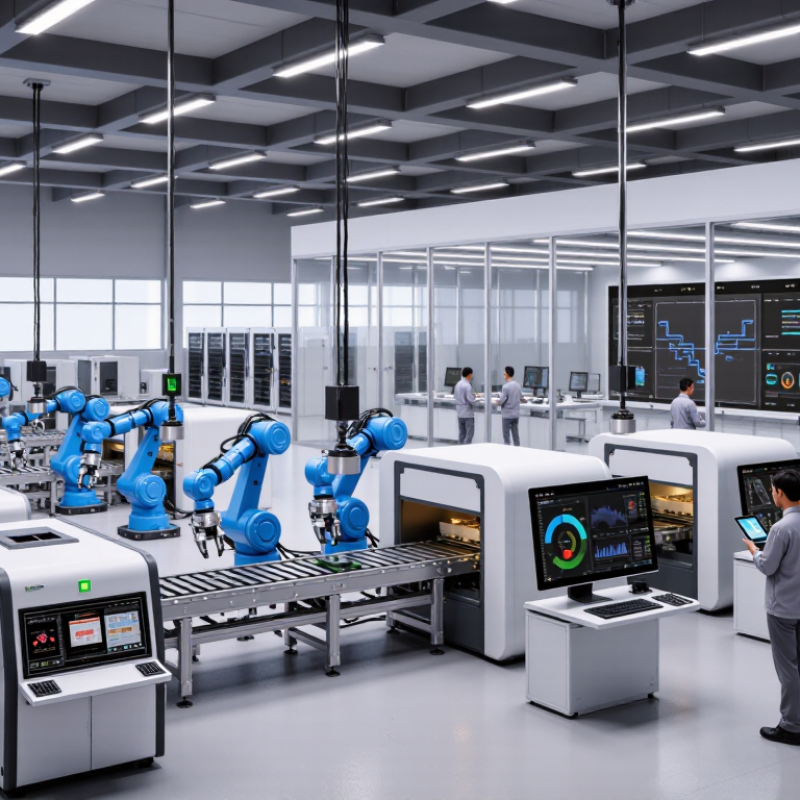
Industrial digitalization systems in China connect factory equipment, production software, data platforms, and operational decisions. Their core elements may include sensors, programmable controllers, manufacturing execution systems, enterprise resource planning, industrial networks, cloud services, and artificial intelligence. In practice, the boundary is not always clean. A modern system often combines shop-floor control with energy monitoring, quality inspection, warehouse management, and maintenance alerts.
China’s market scope covers large manufacturing groups, specialized factories, and smaller workshops upgrading older equipment. Key sectors include automotive, electronics, machinery, chemicals, pharmaceuticals, food processing, and new-energy manufacturing. A production line may send temperature data every few seconds, while managers review defect rates through a regional dashboard. Suppliers therefore compete across software integration, industrial connectivity, data governance, cybersecurity, and long-term technical support.
The leading ten suppliers should not be judged by software features alone. Their practical value depends on deployment experience, engineering capability, industry knowledge, and measurable results. Useful indicators include reduced downtime, faster changeovers, lower energy use, and more consistent product quality. Local service coverage also matters because factories need rapid responses during equipment failures. That assumption is risky. A sophisticated platform can still fail when data standards differ between old machines. Buyers should examine pilot results, training plans, system openness, and ownership of operational data before expanding across multiple plants.
Selecting China’s top ten industrial digitalization systems suppliers should begin with evidence, not publicity. Review at least three completed projects in comparable sectors. Ask for production-line records, commissioning dates, downtime changes, and operator feedback. A polished dashboard means little if alarms still arrive late. Suppliers deserve higher scores when they connect PLCs, MES, ERP, sensors, and energy meters through documented interfaces. Test this claim in a controlled workshop.
Technical capability must be judged beside cybersecurity and service reliability. Assess role-based access, encryption, patch procedures, backup recovery, and incident response. Check whether systems support recognized industrial protocols and clear data ownership. On a real site, a five-minute recovery test can reveal more than a long presentation. Also examine engineering depth: solution architects, local service technicians, training plans, spare parts, and service-level agreements. Quotes should separate licenses, integration, hardware, upgrades, and annual maintenance. Cheap proposals often hide labor and future costs.
A fair top-ten list should combine weighted scoring with site visits and customer interviews. Give practical weight to uptime, integration quality, implementation control, and total ownership cost. Evaluate whether a supplier can scale from one workshop to several plants without rebuilding data models. Legal compliance, worker privacy, and safe remote access must be verified before deployment. Fit varies. Some scores will depend on incomplete customer data or changing project scope. Record those uncertainties instead of forcing a perfect ranking. Recheck the list annually, because technology, service teams, and security risks change quickly.
China’s industrial digitalization market is moving from pilot projects toward measurable factory performance. IDC’s Worldwide Digital Transformation Spending Guide projects global spending to exceed US$3.9 trillion by 2027. This expansion creates space for specialized suppliers, not only large technology groups.
The leading ten supplier profiles should be assessed by practical capabilities. Industrial cloud providers offer scalable computing and data storage. MES specialists connect production orders with shop-floor records. Industrial Internet of Things suppliers collect machine signals through sensors and gateways. Digital-twin developers model equipment behavior and maintenance risks. Automation integrators improve robotic cells, control systems, and line balance. Supply-chain platforms track materials from warehouse docks to final assembly. Energy-management providers monitor electricity, compressed air, and carbon intensity. Industrial cybersecurity firms protect operational networks and access points. Data-platform suppliers unify fragmented records. Service partners support deployment, training, and local maintenance.
Deployment evidence matters. The World Economic Forum’s Global Lighthouse Network reports that leading factories often achieve stronger productivity, quality, and sustainability results together. Yet reported gains vary widely by industry and site maturity. That warning deserves attention. A polished dashboard can hide weak data collection. Many projects also underestimate worker training and legacy equipment. Supplier comparisons should therefore examine verified production cases, system uptime, integration depth, cybersecurity controls, and payback periods. China’s strongest candidates may not be the loudest. Some smaller specialists understand a specific process better than broad platform providers. The ranking remains imperfect without transparent, comparable customer data.
| Rank | Supplier Profile | Core Digitalization Systems | Integration Technologies | Primary Industrial Applications | Deployment Model | Principal Strength | Relevant Standards and Practices |
|---|---|---|---|---|---|---|---|
| 1 | Profile 01 Large-scale automation and control provider |
SCADA, distributed control systems, PLC-based automation, manufacturing execution systems, industrial asset monitoring | OPC UA, Modbus TCP, PROFINET, MQTT, REST APIs, SQL databases | Process manufacturing, energy, chemicals, metallurgy, water treatment | On-premises, private cloud, hybrid deployment | End-to-end control-layer and enterprise-layer integration for complex plants | IEC 61131-3, IEC 62443 security practices, ISO 9001 quality management |
| 2 | Profile 02 Industrial cloud and platform provider |
Industrial Internet platforms, equipment connectivity, data lakes, operational dashboards, predictive analytics | MQTT, OPC UA, HTTPS, REST APIs, containerized services, time-series databases | Discrete manufacturing, equipment manufacturing, electronics, automotive supply chains | Public cloud, private cloud, edge-cloud hybrid | Scalable multi-site data aggregation and industrial application development | Cloud security controls, ISO 27001 practices, role-based access management |
| 3 | Profile 03 Smart manufacturing software specialist |
MES, advanced planning and scheduling, quality management, traceability, electronic work instructions | ERP connectors, OPC UA, REST APIs, SQL, barcode and RFID interfaces | Automotive, machinery, electronics, medical devices, consumer goods | On-premises, private cloud, subscription-based deployment | Production scheduling, genealogy tracking and shop-floor process control | ISA-95 concepts, ISO 9001, ISO 13485 where applicable, electronic records controls |
| 4 | Profile 04 Industrial robotics and machine-vision provider |
Robot control, machine vision, automated inspection, robotic work cells, digital production monitoring | EtherCAT, PROFINET, EtherNet/IP, OPC UA, industrial cameras and sensor interfaces | Automotive, welding, assembly, packaging, logistics, precision manufacturing | Edge-based control with centralized monitoring | High-speed automation, inspection accuracy and flexible production cells | ISO 10218, ISO/TS 15066, IEC 60204-1, machine safety risk assessment |
| 5 | Profile 05 Energy and utility digital systems provider |
Energy management, power monitoring, substation automation, equipment condition monitoring, carbon accounting | IEC 61850, Modbus, DNP3, OPC UA, MQTT, smart-meter interfaces | Power generation, transmission, renewable energy, industrial utilities, buildings | Control center, edge gateway and cloud analytics architecture | Energy visibility, equipment reliability and operational efficiency improvement | IEC 61850, ISO 50001, ISO 14001, cybersecurity zoning and segmentation |
| 6 | Profile 06 Industrial cybersecurity and infrastructure provider |
OT network monitoring, asset discovery, security operations, access control, vulnerability management | Syslog, SNMP, NetFlow, OPC UA monitoring, secure remote access, SIEM connectors | Manufacturing, energy, transportation, water, critical infrastructure | On-premises appliances, private cloud and managed services | Protection of industrial control networks and continuous security visibility | IEC 62443, ISO 27001, NIST Cybersecurity Framework, network segmentation |
| 7 | Profile 07 Digital twin and engineering software provider |
Digital twins, 3D plant modeling, simulation, virtual commissioning, lifecycle engineering | CAD/CAE interfaces, BIM data, OPC UA, PLM connectors, simulation data exchange | Industrial equipment, factories, process plants, construction and infrastructure | Engineering workstation, private cloud and collaborative platform | Design-to-operation continuity and reduced commissioning risk | ISO 10303, ISO 19650 concepts, model-based systems engineering practices |
| 8 | Profile 08 Industrial AI and predictive-maintenance provider |
Condition monitoring, anomaly detection, predictive maintenance, machine learning and quality analytics | Time-series databases, MQTT, OPC UA, REST APIs, vibration and sensor data streams | Rotating equipment, heavy industry, transportation, energy and process plants | Edge inference with centralized analytics | Early fault detection and maintenance planning based on operational data | ISO 13374, ISO 17359, data governance, model validation and human oversight |
| 9 | Profile 09 Industrial logistics and warehouse automation provider |
Warehouse management, warehouse control, automated storage and retrieval, fleet management, track-and-trace | REST APIs, SQL, MQTT, OPC UA, barcode, RFID and warehouse equipment interfaces | Manufacturing logistics, e-commerce, ports, distribution centers and cold-chain operations | Edge control with cloud or private-server management | Material-flow optimization, inventory accuracy and automated intralogistics | ISO 9001, equipment safety procedures, cybersecurity access controls |
| 10 | Profile 10 Industrial consulting and system-integration provider |
Digital transformation planning, system integration, data governance, custom applications and managed operations | ERP, MES, SCADA, PLM, CRM and IoT connectors; APIs; ETL pipelines | Cross-industry manufacturing, infrastructure, transportation and public-sector operations | Project-based, managed service, hybrid and multi-vendor environments | Integration of legacy equipment, software platforms and standardized data models | ISA-95, ISA-88, ISO 9001, ISO 27001 and lifecycle-based project governance |
Note: Supplier identifiers are intentionally omitted. The profiles compare representative capabilities, technologies, applications and implementation practices commonly found among leading industrial digitalization system suppliers operating in China.
China’s top ten industrial digitalization systems suppliers differ mainly in technology depth and implementation quality. A useful comparison begins with real factory needs, not product slogans. Core capabilities include industrial internet platforms, edge computing, digital twins, machine vision, and predictive maintenance. Strong suppliers connect sensors, programmable controllers, and enterprise software through secure data models.
Application results vary by industry. In automotive plants, digital twins can test production changes before equipment moves. In steel mills, edge analytics can detect abnormal vibration within seconds. Food manufacturers often need traceability, temperature alerts, and strict access controls. Textile factories may prioritize energy dashboards and flexible scheduling. These systems work best when data remains visible from the workshop to management.
Field evaluations should examine deployment time, integration with older equipment, cybersecurity practices, and local technical support. Ask for measurable evidence, such as reduced downtime, faster changeovers, or lower energy use. A reliable supplier also explains data ownership and recovery procedures. Promises alone are weak evidence. Some projects still struggle because operators receive limited training, while dashboards become too complex for daily use. That weakness deserves attention. The best system is not always the most advanced. It is the one workers can understand, maintain, and improve.
Selecting among China’s top ten industrial digitalization systems suppliers requires more than comparing feature lists. A suitable partner should understand plant workflows, equipment age, data quality, cybersecurity, and local operating conditions. Ask for documented deployments in similar factories, not polished demonstrations. Request uptime records, training plans, integration diagrams, and support response times. Small details matter. A supplier that cannot explain failure recovery may create expensive uncertainty.
During selection, define measurable requirements before discussing software modules. Specify machine connectivity, reporting intervals, user permissions, maintenance alerts, and expected payback. Review total ownership costs, including sensors, network upgrades, licenses, customization, and five-year support. Independent testing helps verify claims. Interview existing users, although references can still be carefully prepared. That limitation deserves attention.
Deployment should begin with a controlled production line, using real operators and imperfect data. Keep the pilot long enough to expose shift changes, missing tags, and unstable network signals. Assign one accountable project owner on each side. Weekly workshops should record decisions, defects, and unresolved assumptions. Service quality depends on practical access, not promises. Confirm escalation paths, spare hardware, remote-support controls, patch procedures, and offline operating options. Training must include night-shift staff, contractors, and supervisors. We often underestimate them. After launch, review adoption, data accuracy, downtime reduction, and operator feedback monthly. If targets are missed, adjust the process rather than hiding the result.