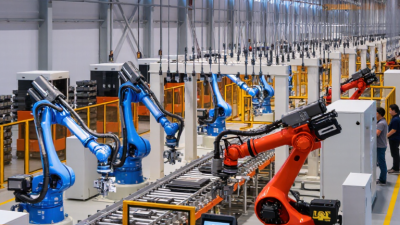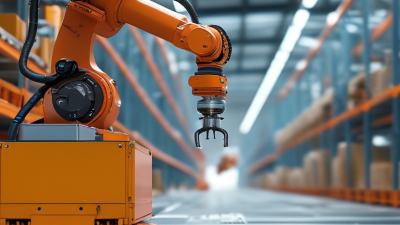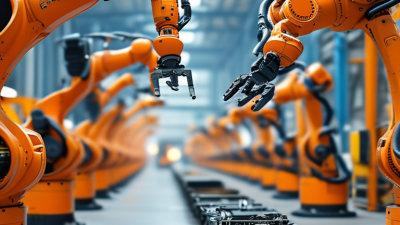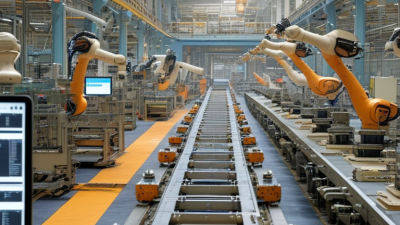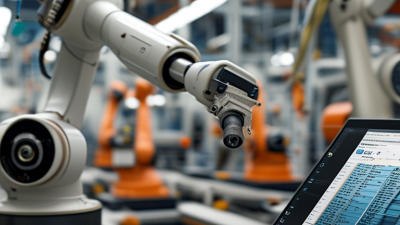
Production line automation connects machines, software, sensors, and people into a coordinated manufacturing system. It can move parts, control assembly, inspect quality, and record production data with limited manual intervention. A typical line may include conveyors, programmable logic controllers, robotic arms, vision cameras, and a manufacturing execution system. These components exchange signals continuously. The result is a process that can respond faster than isolated machines.
The International Federation of Robotics reported 541,302 industrial robots were installed worldwide in 2023. Its World Robotics 2024 report also recorded more than 4.28 million robots operating in factories globally. These figures show that automation is no longer limited to automotive plants. Electronics, food processing, pharmaceuticals, and logistics increasingly use similar technologies. Deloitte’s Smart Manufacturing and Operations Survey found that manufacturers expect smart operations to improve productivity, quality, and workforce performance. However, expectations do not guarantee results.
A production line automation project usually begins with process mapping. Engineers identify bottlenecks, repetitive movements, safety risks, and inspection failures. They then select equipment and design communication between the control layer and business systems. Sensors detect position, temperature, pressure, or defects. Controllers interpret those inputs and trigger precise actions. Operators still supervise exceptions, maintenance, and improvement decisions.
No factory is perfectly automated. Poor data, weak maintenance, or unsuitable equipment can create expensive downtime. Integration also requires training and careful testing. The strongest systems combine machine consistency with human judgment. This article explains what production line automation means, how its control cycle works, and which practical factors determine its value.
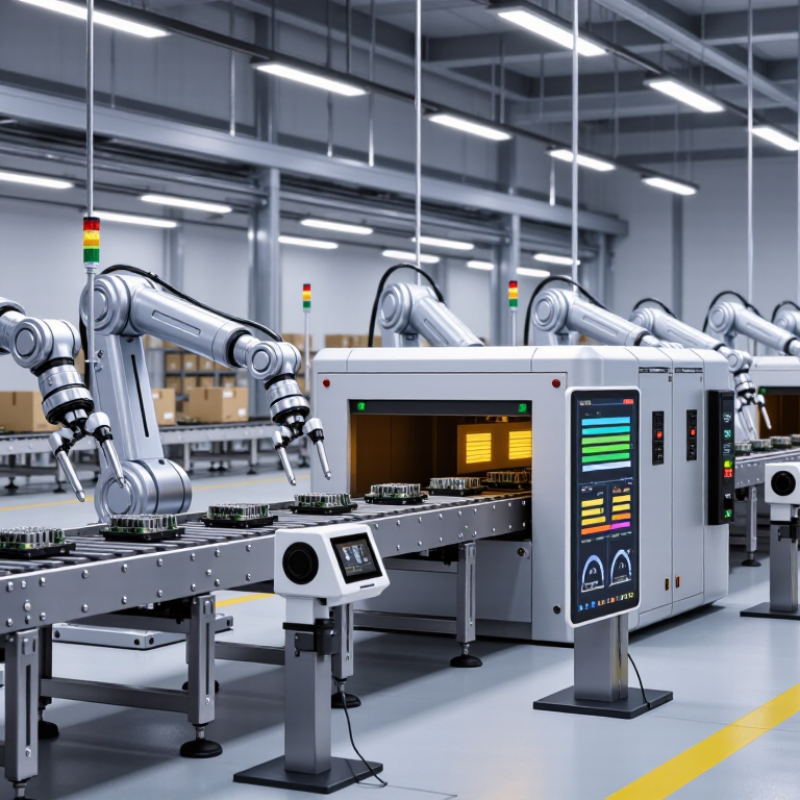
Production line automation is the coordinated use of machines, software, sensors, and controls to move materials through manufacturing steps. It reduces repetitive manual work while keeping process conditions more consistent. A typical line may feed parts, position them, assemble components, inspect results, and transfer finished goods. Automation can be partial or nearly complete.
The core begins with mechanical equipment, such as conveyors, feeders, fixtures, and robotic handling units. Sensors detect presence, distance, temperature, pressure, or position. Controllers interpret these signals and issue timed commands to motors, valves, and actuators. Human-machine interfaces show alarms, counts, and operating status. Production software records cycle times, faults, and traceability data. Safety devices, including guards and emergency stops, help control foreseeable risks around moving equipment.
In practice, integration matters more than any single component. If a sensor is misaligned by a few millimeters, an accurate controller may still produce rejected parts. Engineers usually test handoffs between stations because delays often appear there. Clean data helps maintenance teams locate recurring faults faster. Still, automation is not magic. Poorly designed fixtures, unstable materials, or unclear maintenance duties can weaken the entire line. Some manual checks may remain valuable when product variation is high or inspection conditions change. Effective systems combine measured automation with practical human judgment.
Automated production lines turn raw materials into finished goods through connected, repeatable steps. The process usually begins with material loading. Sensors check the position, weight, and condition of each item. A programmable controller then releases the material onto a conveyor at a controlled speed.
The line performs one operation at a time. Robotic tools may cut, fill, fasten, weld, or package the product. After each action, sensors send data to the control system. Cameras inspect size, color, alignment, and visible defects. If a measurement falls outside the approved range, the system can stop the line or remove the item automatically.
The cycle repeats. Not always smoothly.
Operators monitor the process from a control panel and respond to alarms, jams, or unusual readings. They also verify samples at scheduled intervals because automation does not remove the need for human judgment. In practice, small changes in temperature, material quality, or tool wear can affect output. A reliable line records these changes and helps maintenance teams identify patterns before failures become serious.
Production data can also show slower stations and repeated quality problems. Engineers use this information to adjust timing, improve safeguards, and reduce unnecessary movement. However, a fast line is not automatically an efficient line. Poorly designed automation may increase waste or make faults harder to understand. Careful testing, documented procedures, and regular inspections keep each step controlled and traceable.
Production line automation combines machines, software, sensors, and human decisions. At its core, it turns repeated production steps into coordinated actions. Photoelectric sensors detect product positions, while pressure and temperature sensors monitor operating conditions. A programmable logic controller processes these signals and controls motors, valves, and actuators. It is not magic. When a sensor reports an error, the controller can stop the line before defective products continue moving.
Industrial robots handle tasks such as picking, welding, fastening, and palletizing. Collaborative robots can support workers in shared spaces, but their use still requires careful risk assessment. Machine vision systems inspect labels, dimensions, surface marks, and assembly positions. A camera checks every item. That consistency is valuable, especially during long shifts. Conveyors, servo drives, and automated storage systems then maintain product flow. However, poor equipment placement can create bottlenecks, even when each machine performs well.
Supervisory control systems display equipment status, alarms, and production trends. Manufacturing execution software can connect work orders with material usage, inspection results, and operator records. Historical data may reveal rising motor temperatures before a breakdown occurs. Safety controllers, guards, emergency stops, and access sensors protect people around moving equipment. Engineers should validate these systems through testing, maintenance records, and documented procedures. Fully automated lines still need skilled technicians. Automation reduces repetitive work, but it does not remove judgment. That assumption often fails.
What Is Production Line Automation and How Does It Work?
Benefits and Limitations of Automated Manufacturing Systems
Production line automation uses sensors, controllers, software, and machines to perform repeated manufacturing tasks. A sensor detects a component’s position, while a controller sends instructions to a motor or robotic tool. The line can then assemble, inspect, move, and package products with limited manual intervention. Operators still monitor settings, replenish materials, and respond to unusual conditions. The process is fast, but not magical.
The main benefit is consistent output. Automated equipment can repeat the same movement thousands of times without fatigue. It can also improve workplace safety by handling hot, heavy, or sharp materials. Quality sensors may identify a missing screw or uneven seal within seconds. Production data helps supervisors track stoppages and maintenance needs. Labor savings can be significant over time, especially for high-volume work.
Limitations deserve equal attention. Installation requires substantial planning, training, and capital. A poorly adjusted sensor can stop an entire line because of one dusty surface. Automated systems may also struggle with unexpected product variations. Human workers often notice subtle problems that cameras or programmed rules miss. Maintenance skills are essential, yet companies sometimes underestimate them. A flexible line can handle more product types, but flexibility often increases software complexity. Before automation begins, engineers should study cycle times, failure points, and material flow. The first design may look efficient on paper and still perform poorly beside a real production line.
Production line automation connects machines, sensors, software, and people into a coordinated workflow. In practice, it can control filling, assembly, inspection, packaging, and material movement. A programmable controller receives sensor signals and adjusts motors, valves, or robotic tools within milliseconds. Machine vision can detect a missing label or a small surface defect. That decision must still follow clear quality rules.
Applications are expanding across food processing, electronics, automotive parts, and medical equipment manufacturing. Automated inspection improves consistency, while digital records support traceability and quality audits. Sensors can measure vibration, temperature, pressure, and energy use. Maintenance teams then identify unusual patterns before a motor fails. However, automation is not automatically efficient. A poorly placed sensor can create false alarms, interrupt production, and frustrate operators. Human review remains essential.
Future systems will combine edge computing, artificial intelligence, digital twins, and collaborative robots. Edge devices can analyze production data locally, reducing delays and improving privacy. Digital twins may test layout changes before engineers move physical equipment. Collaborative robots can support repetitive lifting while workers handle judgment-based tasks. Energy-aware controls could reduce idle power and adjust equipment during demand changes. Cybersecurity will also become part of routine maintenance, not an afterthought. The first deployment is rarely elegant. Data can be noisy, processes can change, and operators may need more training than planners expect.
| Application Area | Typical Automated Tasks | Main Equipment and Technologies | Typical Cycle-Time Band | Key Performance Measures | How Automation Creates Value |
|---|---|---|---|---|---|
| Assembly | Part positioning, fastening, pressing, joining, testing, and traceability recording. | Robotic arms, servo presses, electric screwdrivers, fixtures, vision sensors, programmable logic controllers, and human-machine interfaces. | Approximately 10–60 seconds per assembled unit, depending on product complexity. | Units per hour, first-pass yield, defect rate, changeover time, and equipment availability. | Improves repeatability, reduces ergonomic strain, and supports consistent production at high volume. |
| Packaging and Palletizing | Filling, capping, labeling, cartoning, case packing, weighing, palletizing, and product inspection. | Conveyors, pick-and-place robots, checkweighers, labelers, barcode readers, palletizers, and safety scanners. | Approximately 1–15 seconds per package; palletizing is commonly measured in cases per minute. | Throughput, package accuracy, fill-weight variation, line stoppages, and packaging-material waste. | Maintains high-speed flow, reduces repetitive manual handling, and improves package consistency. |
| Quality Inspection | Dimensional checks, surface inspection, presence-and-absence verification, code reading, and leak detection. | Industrial cameras, lighting systems, laser sensors, force sensors, measurement gauges, and inspection software. | Milliseconds to several seconds per inspection, depending on the number of characteristics checked. | False-reject rate, missed-defect rate, measurement repeatability, inspection coverage, and response time. | Provides objective, repeatable inspection and detects defects earlier in the production process. |
| Material Handling | Part loading and unloading, sorting, machine tending, transfer between stations, and finished-goods movement. | Industrial robots, collaborative robots, conveyors, automated storage systems, guided mobile vehicles, and grippers. | Approximately 5–30 seconds per handling cycle, depending on distance, load, and positioning accuracy. | Moves per hour, travel distance, payload utilization, positioning accuracy, and unplanned downtime. | Reduces non-value-added movement, improves workplace safety, and keeps connected workstations supplied. |
| Machining and Fabrication | Cutting, drilling, milling, turning, welding, deburring, tool changing, and in-process measurement. | Computer numerical control machines, robotic welding cells, automated tool changers, probing systems, and production monitoring software. | Several seconds to several minutes per part, depending on material removal, geometry, and process steps. | Dimensional accuracy, tool life, spindle utilization, scrap rate, setup time, and overall equipment effectiveness. | Increases process stability, reduces setup variation, and supports repeatable production of complex parts. |
| Food and Beverage Processing | Ingredient dosing, mixing, filling, sealing, sorting, cleaning, and date-code verification. | Flow meters, pumps, hygienic conveyors, checkweighers, temperature sensors, vision systems, and cleanable control equipment. | Sub-second dosing or inspection actions to several minutes for batch processing. | Fill accuracy, product temperature, sanitation time, line speed, waste percentage, and batch consistency. | Supports hygiene control, consistent portioning, high throughput, and improved product traceability. |
| Pharmaceutical and Medical Production | Dosing, filling, labeling, inspection, serialization, packaging, and environmental monitoring. | Precision pumps, isolators, cleanroom robots, vision inspection, electronic batch records, and controlled process systems. | Typically seconds per container or device, with batch steps ranging from minutes to hours. | Dose accuracy, reject rate, environmental conditions, batch-record completeness, and traceability. | Improves contamination control, process repeatability, documentation, and compliance with regulated procedures. |
| Warehouse and Intralogistics | Receiving, storage, order picking, sorting, replenishment, packing, and dispatch handling. | Automated storage and retrieval systems, mobile robots, conveyors, scanners, dimensioning systems, and warehouse-control software. | Seconds to minutes per item movement, depending on travel distance, storage layout, and order profile. | Order lines per hour, inventory accuracy, picking accuracy, travel time, utilization, and order lead time. | Reduces travel and manual searching while improving inventory visibility and fulfillment speed. |
| System Layer | Function | Typical Data Generated | Role in the Production Cycle |
|---|---|---|---|
| Sensors and Identification | Detects position, presence, temperature, pressure, force, dimensions, and product identity. | Sensor readings, barcode data, camera images, measurement results, and alarm signals. | Provides the real-time information required to trigger, adjust, or stop an operation. |
| Control and Motion | Executes programmed sequences and controls motors, valves, actuators, robots, and machine tools. | Machine states, motion commands, cycle counts, set points, and fault codes. | Coordinates the timing and movement of equipment across connected workstations. |
| Supervisory Monitoring | Displays production status, manages recipes, records events, and supports operator decisions. | Downtime records, production counts, quality results, energy readings, and operator actions. | Makes line performance visible and enables faster response to deviations. |
| Production and Business Systems | Connects production data with planning, inventory, maintenance, quality, and order-management processes. | Work orders, material consumption, maintenance history, quality records, and production schedules. | Links shop-floor execution with planning and reporting across the operation. |
| Development | Current or Emerging Capability | Expected Production Benefit | Implementation Consideration |
|---|---|---|---|
| Artificial-Intelligence-Based Inspection | Vision models classify variable surface defects and recognize patterns that are difficult to define with fixed rules. | More flexible inspection and faster adaptation to product variation. | Requires representative training data, model validation, cybersecurity controls, and human oversight. |
| Predictive Maintenance | Equipment data is analyzed to identify abnormal vibration, temperature, current, or cycle behavior before failure. | Fewer unexpected stoppages and better planning of maintenance resources. | Needs reliable historical data, suitable sensors, clear alarm thresholds, and maintenance procedures. |
| Human-Robot Collaboration | Robots assist with lifting, positioning, dispensing, inspection, and repetitive tasks near operators. | Combines human judgment and flexibility with robotic repeatability. | Requires risk assessment, guarded operating modes, speed limits, training, and appropriate tooling. |
| Digital Twins and Simulation | Virtual production models are used to test layouts, process sequences, capacity, and control logic before physical changes. | Reduces commissioning risk and supports faster line optimization. | The model must be synchronized with actual equipment, process rules, and reliable operating data. |
| Edge Computing and Industrial Connectivity | Production data is processed close to machines for rapid control, monitoring, and local analytics. | Lower response times, improved data availability, and reduced dependence on remote systems. | Requires interoperable communication standards, network segmentation, access controls, and lifecycle support. |
| Flexible and Modular Production | Quick-change tooling, software-configurable stations, autonomous material movement, and recipe-based production support multiple products. | Shorter changeovers and better economic performance for high-mix, lower-volume production. | Modular design, standardized interfaces, accurate product data, and disciplined change management are essential. |
| Energy and Resource Optimization | Energy meters and process analytics identify inefficient operating states, compressed-air losses, material waste, and idle consumption. | Lower energy use, reduced waste, and improved sustainability reporting. | Measurements must be associated with products, batches, operating states, and defined performance baselines. |