China Best Automated Production Lines Suppliers?

China has become a major sourcing base for automated production lines, supported by strong robotics demand and extensive manufacturing capacity. The International Federation of Robotics reported 276,288 industrial robots installed in China during 2023. China also held the world’s largest operational robot stock, exceeding 1.7 million units. These figures show scale, but scale alone does not prove supplier quality.

In World Robotics 2024, IFR President Marina Bill stated, “The new record of 4 million operational robots worldwide is a result of the strong growth of robot installations in recent years.” Her comment reflects a wider shift toward connected assembly, machine vision, robotic handling, and real-time production data. Deloitte’s 2024 Smart Manufacturing and Operations Survey also found that many manufacturers view smart manufacturing as essential to future competitiveness.

Finding China’s best automated production lines suppliers requires more than comparing prices. Buyers should examine documented cycle times, overall equipment effectiveness, safety validation, software integration, spare-parts response, and factory acceptance testing. A supplier may display an impressive demonstration cell, yet struggle with unstable materials or difficult changeovers. That risk is often overlooked.

Look closely.

The strongest suppliers provide process simulations, traceable component lists, and measurable acceptance criteria. They also explain what happens when sensors fail at 2 a.m. Industry experience matters here. However, no supplier is perfect, and even a well-designed line may need adjustment after installation. This introduction evaluates leading Chinese suppliers through technical capability, project experience, customization, service coverage, and evidence from independent industry reports. The goal is practical comparison, not promotional ranking.
China Best Automated Production Lines Suppliers?

What Are Automated Production Lines and Why Source Them from China?

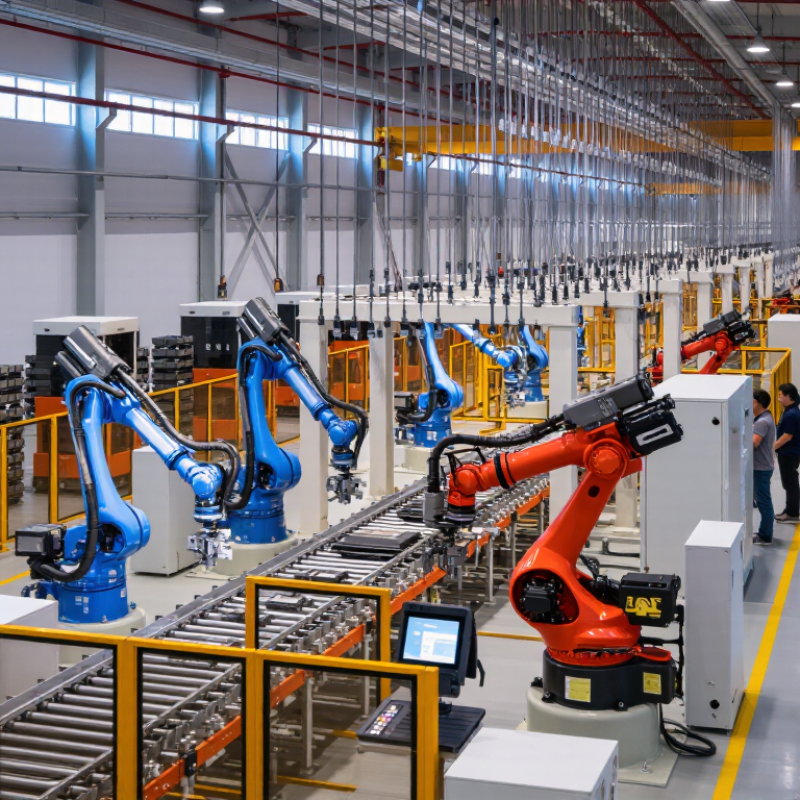
Automated production lines combine machines, conveyors, sensors, robotics, and control software into one coordinated manufacturing system. They can feed components, perform assembly, inspect defects, and package finished goods with limited manual handling. A typical line may include vision cameras, torque tools, programmable controllers, and real-time production data. The goal is not simply speed. Stable quality, traceability, safer operations, and lower long-term labor pressure matter just as much.

China is a practical sourcing destination because its manufacturing network covers mechanical parts, electrical systems, robotics integration, and factory installation. Experienced suppliers can adapt a line to product dimensions, cycle time, floor space, and local power standards. Buyers should request process drawings, sample testing, equipment lists, and factory acceptance testing before shipment. Check electrical safety, guarding, emergency stops, software access, spare parts, and operator training. These details often reveal more than a polished quotation.

Do not trust price alone. A cheaper line may exclude tooling, installation, validation, or after-sales support. That mistake becomes expensive. Video meetings help, but an independent factory audit is stronger. Ask for measurable performance data from similar projects, while recognizing that every product behaves differently. Even a well-engineered line may need tuning after installation. This is where reliable communication, documented changes, and clear acceptance criteria protect the investment.

Which Industries and Manufacturing Processes Use Chinese Automated Lines?

Chinese automated production lines serve automotive, electronics, metalworking, plastics, food, and pharmaceutical manufacturing. Automotive plants use robotic welding, painting, sealing, and final assembly. Electronics factories apply high-speed placement, optical inspection, testing, and traceability systems. These lines often combine robots, conveyors, machine vision, sensors, and industrial software.

The International Federation of Robotics reported 276,288 industrial robot installations in China during 2023. That represented about 51% of global installations. Its World Robotics 2024 report also recorded approximately 470 robots per 10,000 manufacturing employees in China. Metalworking lines use automated cutting, bending, welding, and palletizing. Plastics producers commonly automate injection molding, trimming, inspection, and packing.

Food and beverage facilities need different priorities. Hygienic design, washdown resistance, precise filling, labeling, and case packing matter more than extreme speed. Pharmaceutical lines add controlled environments, serialization, inspection, and strict batch records. The International Federation of Robotics identifies electronics, automotive, metal and machinery, and plastics as major robot-using sectors.

In practice, line selection is less simple than supplier rankings suggest. A fast robot cannot repair poor material flow. Some factories also underestimate changeover time, worker training, and spare-parts access. That is where many projects become expensive. Careful commissioning data and process trials remain essential.

How to Evaluate China’s Automated Production Line Suppliers

China Best Automated Production Lines Suppliers?

Evaluating China’s automated production line suppliers requires more than comparing prices. Examine their engineering experience, process control, and ability to adapt equipment to your product. Request drawings, cycle-time records, quality data, and references from similar projects. A polished demo can mislead. Ask to inspect a working line under normal production conditions, not only during a prepared presentation.

Review the supplier’s technical team carefully. Can they explain sensors, robot safety, software backups, and maintenance intervals clearly? Confirm whether critical components are traceable and readily replaceable. Factory acceptance testing should include speed, accuracy, emergency stops, changeover time, and rejected-product handling. Check installation plans, operator training, spare-parts support, and response times. A low quotation may hide expensive integration work.

Tips: Define measurable acceptance standards before signing. Compare total ownership costs, not equipment prices alone. Ask for a risk list with corrective actions and deadlines. Keep communication documented. Language gaps can create small but costly misunderstandings. Visit the supplier if possible, and bring an engineer who understands your process. Also, leave room for improvement; initial specifications are often incomplete. The supplier should welcome revisions, though endless changes can damage both schedule and budget. Evaluate evidence, not confidence.

What Standards and Technologies Define Supplier Quality?

China’s best automated production line suppliers prove quality through evidence, not polished demonstrations. A reliable supplier should provide ISO 9001 quality controls, documented process inspections, and traceable component records. For machinery safety, ask how the design follows ISO 13849 and IEC 60204-1 requirements. Certificates alone are not enough.

During a factory audit, inspect wiring labels, safety doors, emergency stops, and calibration records. Request a factory acceptance test using your actual materials and production cycle. Watch the line run for several hours. Short tests can hide overheating, sensor drift, or unstable cycle times. No supplier is flawless. However, honest teams explain risks and corrective actions clearly.

Strong technology should support stable production, not create unnecessary complexity. Servo systems should maintain repeatable positioning under changing loads. Vision inspection should record images, rejection reasons, and lighting conditions. PLC programs need version control and accessible backup files. MES connectivity can provide batch traceability, downtime records, and real-time OEE data. Ask whether operators can understand the interface after practical training. A beautiful dashboard may still produce weak data. Review maintenance response times, spare-part availability, and remote support procedures before signing. Supplier quality becomes clearer when technical claims survive a real production environment.

China Best Automated Production Lines Suppliers? - What Standards and Technologies Define Supplier Quality?

Quality Dimension Relevant Standard or Method Recommended Verification Data Practical Acceptance Criteria Why It Defines Supplier Quality
Quality management system ISO 9001:2015 Valid certificate, controlled procedures, nonconformance records, corrective-action evidence, and audit history Certificate scope covers engineering, manufacturing, integration, installation, or service activities included in the project Shows whether the supplier uses a repeatable process for design control, purchasing, production, and improvement
Machine risk assessment ISO 12100 Risk assessment, hazard list, risk-reduction measures, residual-risk documentation, and user instructions All identified hazards have documented protective measures and verification records before shipment Confirms that safety is engineered into the line rather than added only after assembly
Functional safety of controls ISO 13849-1 or IEC 62061 Required Performance Level (PLr) or Safety Integrity Level (SIL), safety circuit calculations, validation reports, and diagnostic coverage Achieved PL or SIL is equal to or greater than the level required by the risk assessment Demonstrates that emergency stops, guards, light curtains, and interlocks perform their intended safety functions
Robot and integrated-cell safety ISO 10218-1 and ISO 10218-2 Robot risk assessment, safeguarding layout, operating modes, collaborative-operation assessment where applicable, and validation records Robot, tooling, fixtures, conveyors, and peripheral equipment are assessed as one integrated application Prevents gaps between robot safety and the safety of the complete production cell
Electrical design and wiring IEC 60204-1 Electrical schematics, protective bonding tests, insulation tests, short-circuit protection, panel inspection, and labeling records Electrical documentation matches the delivered machine and required tests are completed before acceptance Improves operator safety, troubleshooting speed, maintainability, and installation consistency
Guarding and access control ISO 14120 and ISO 14119 Guard design review, interlock type, defeat-resistance assessment, access-point list, and reset logic Every access point is protected, monitored, clearly identified, and tested under normal and fault conditions Reduces exposure to moving parts and limits unsafe bypassing of protective devices
Emergency-stop function ISO 13850 Emergency-stop location plan, stopping-response test, reset procedure, and restart-prevention test Activation stops the relevant hazardous movement and does not permit automatic restart after reset Provides a consistent method for rapidly reducing risk during abnormal situations
Cycle-time capability Time-study validation and approved production recipe Product format, takt time, cycle-time distribution, buffer size, changeover time, and test sample quantity Measured cycle time meets the contractual target using production-representative materials and operating conditions Separates theoretical machine speed from repeatable line performance
Overall Equipment Effectiveness OEE methodology: Availability × Performance × Quality Planned production time, downtime, ideal cycle time, total units, good units, scrap, and rework Supplier defines the calculation rules and reports each component separately; no universal OEE target should be assumed Creates a transparent view of losses instead of relying only on nameplate capacity
First-pass yield and defect control Process capability and quality-control plan Good units without rework, defect categories, inspection method, sampling plan, and corrective-action records Acceptance target is defined by product risk and agreed before Factory Acceptance Testing (FAT) Shows whether the line produces conforming products consistently on the first attempt
Traceability and data integrity Product genealogy, audit trails, and documented data-retention requirements Serial or batch linkage, operator and recipe records, time stamps, user permissions, backup procedure, and retrieval test Required production parameters can be retrieved accurately for the agreed retention period Supports root-cause analysis, regulated production, recall control, and process improvement
Industrial communication Documented industrial Ethernet or fieldbus architecture Network topology, device list, address plan, interface specification, diagnostic functions, and data-exchange test All required signals, alarms, recipes, and production data communicate correctly with the specified supervisory system Reduces integration risk and makes future expansion more practical
Industrial cybersecurity IEC 62443 principles, network segmentation, access control, and secure maintenance practices User-role matrix, remote-access method, patch policy, backup controls, firewall rules, and incident-response procedure Remote access is controlled, logged, approved, and capable of being disabled by the customer Protects production availability, intellectual property, and operational technology networks
Factory Acceptance Test (FAT) Approved FAT protocol and traceable test records Test cases, sample quantities, operating recipes, safety tests, alarms, cycle-time results, quality results, and punch-list status All critical tests pass using agreed materials, formats, and acceptance conditions before shipment Provides objective evidence that the line is ready for installation and site commissioning
Site Acceptance Test (SAT) Approved SAT protocol under actual site conditions Installation checks, utilities, line integration, operator training, sustained production run, and open-issue closure Performance is confirmed after installation with customer-supplied utilities, materials, and upstream/downstream equipment Confirms that the complete system works in the real manufacturing environment
Maintainability and spare parts Preventive-maintenance plan and maintainability review Critical-spares list, recommended stock levels, replacement procedures, lubrication schedule, mean-time-to-repair assumptions, and service response process Critical maintenance tasks are documented and parts can be identified by drawing, specification, and revision Controls lifecycle cost and reduces extended downtime after commissioning
Documentation and training Controlled technical documentation package User manual, electrical drawings, pneumatic diagrams, software backup, parameter list, spare-parts list, training records, and revision history Documents match the delivered configuration and are supplied in the agreed language and file formats Enables safe operation, faster troubleshooting, and controlled future modifications

Evaluation note: Standards identify recognized design and safety requirements, but supplier quality should be judged through documented evidence, representative testing, transparent acceptance criteria, and successful FAT and SAT results. Performance targets must be agreed according to the product, process, materials, operating conditions, and local regulatory requirements.

How to Compare Costs, Customization, Installation, and After-Sales Support

China Best Automated Production Lines Suppliers?

Choosing a Chinese production-line supplier requires more than comparing the first quotation. The International Federation of Robotics reported 541,302 industrial robots were installed worldwide in 2023. That scale creates strong engineering capacity, but quality still varies between factories. Request a cost breakdown for robots, conveyors, controls, tooling, safety systems, shipping, installation, and training. A low equipment price can hide expensive integration work. Ask for energy use and spare-part costs over five years.

Customization should be tested with evidence, not promises. Send sample parts, cycle-time targets, drawings, and changeover requirements. Require a factory acceptance test using your actual materials. Watch the line run. Sensors should detect misaligned components, stop safely, and record faults. Deloitte’s 2024 Smart Manufacturing and Operations Survey found 86% of manufacturers expect smart manufacturing to become important for competitiveness within five years. Software compatibility therefore matters as much as mechanical accuracy. Some buyers over-customize early. That can increase risk.

Installation deserves a written schedule covering utilities, floor plans, commissioning milestones, and operator training. Confirm who handles local compliance and remote troubleshooting. After-sales support should specify response times, diagnostic access, warranty limits, spare-part availability, and technician travel costs. The same Deloitte survey reported that 83% of respondents expect smart manufacturing to improve production efficiency. That result is encouraging, not guaranteed. Compare suppliers through reference calls, test records, uptime data, and measurable acceptance criteria. Leave room for human error; rushed training can damage a good line.