What is Process Automation Technology and How Does It Work?
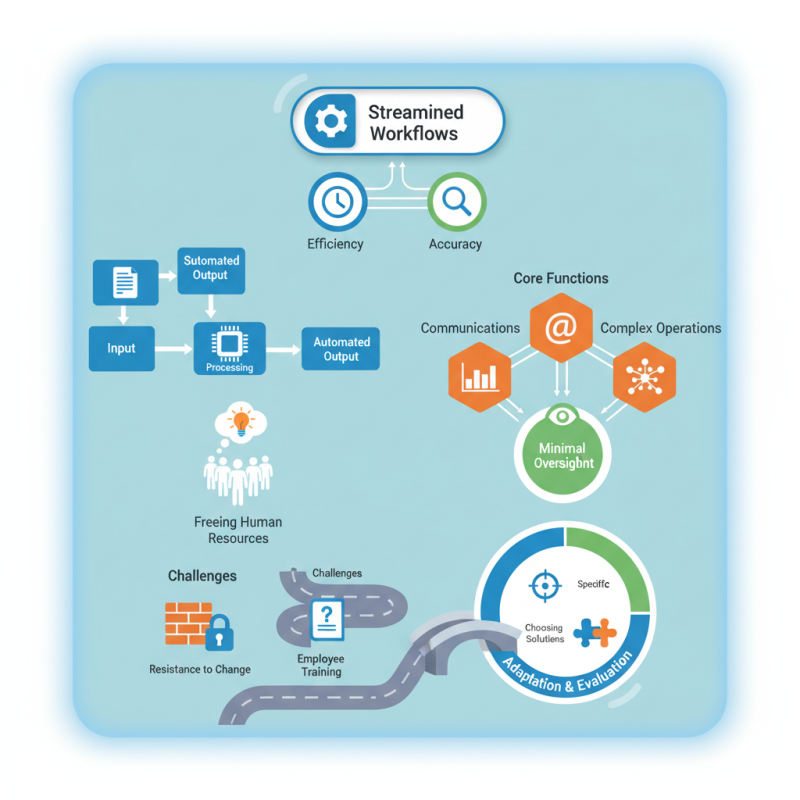
Process automation technology is revolutionizing how organizations operate. Companies leverage this technology to streamline their workflows and reduce manual tasks. By automating processes, they can achieve greater efficiency and accuracy.
Imagine a world where repetitive tasks are handled by software, freeing up valuable human resources. This transformation is not just theoretical; it occurs daily across various industries. Automated systems can process data, manage communications, and oversee complex operations with minimal oversight.
Despite its advantages, implementing process automation technology can be challenging. Many organizations face obstacles, such as resistance to change or the need for employee training. As companies navigate these hurdles, they must reflect on their specific needs and carefully choose the right solutions. The journey towards automation requires continuous evaluation and adaptation to maximize potential benefits.
What is Process Automation Technology?
Process Automation Technology (PAT) refers to the software and tools that help organizations automate routine tasks. It can significantly improve efficiency and reliability across various sectors, from manufacturing to finance. According to a 2022 report by McKinsey, companies that implement automation can boost productivity by up to 30%. This level of improvement highlights its vital role in today's business environment.
PAT utilizes algorithms and advanced software to perform tasks traditionally managed by humans. For example, robotic process automation (RPA) can handle data entry, order processing, and invoice management. By 2024, the global RPA market is expected to reach $10 billion, according to a recent report from Gartner. These statistics indicate a growing trend towards adopting automation technologies.
Despite its advantages, there are concerns about over-reliance on automation. In some cases, businesses may face challenges in implementing these technologies successfully. According to a study by Forrester, nearly 60% of automation initiatives fail to deliver expected results. This emphasizes the need for businesses to carefully assess their processes before full implementation. Balancing automation with human insight is crucial for success, pushing organizations to reflect on their approach.
Key Components of Process Automation Systems
Process automation technology plays a vital role in today’s business landscape. The key components of process automation systems include workflow automation, data integration, and analytics. These elements work together to increase efficiency and reduce errors. According to a report from McKinsey, businesses that employ automation can reduce operational costs by up to 30%.
Workflow automation helps streamline repetitive tasks, allowing employees to focus on higher-value work. It simplifies complex processes by using software tools to manage tasks, approvals, and notifications. Data integration serves as the backbone that connects various systems. With 65% of organizations struggling with data silos, integrating these systems ensures accuracy and consistency across platforms.
Moreover, analytics enable businesses to make informed decisions. By analyzing data generated through automated processes, companies can identify bottlenecks and areas for improvement. Yet, it's crucial to note that not all automation efforts yield immediate results. Organizations must regularly assess their processes. Continuous improvement is necessary for long-term success. The journey to effective process automation is ongoing and may require adjustments along the way.
How Process Automation Improves Operational Efficiency
Process automation technology serves as a catalyst for enhancing operational efficiency within organizations. By streamlining repetitive tasks, it reduces the burden on employees, enabling them to focus on more strategic activities. For example, automated workflows can manage data entry and customer inquiries, cutting down response times significantly. Such improvements can lead to reduced operational costs and quicker project completion.
However, implementing process automation isn’t without its challenges. Companies may face resistance from staff who fear job displacement. Moreover, the initial investment in technology can be daunting. Organizations must carefully assess their needs and determine the potential return on investment. Not every process is suitable for automation; some require human intuition and creativity. Finding the right balance between automation and human input is crucial for successful integration.
Furthermore, the effectiveness of automation hinges on the quality of data being processed. Poor data can lead to errors and inefficiencies, undermining the very advantages automation is supposed to provide. Regular audits and adjustments to automated processes are necessary to ensure ongoing performance. Organizations should remain adaptable and review their automation strategies regularly to maintain the benefits.
What is Process Automation Technology and How Does It Work? - How Process Automation Improves Operational Efficiency
| Aspect |
Description |
Benefits |
Examples |
| Definition |
Process Automation Technology refers to the use of software to create repeatable instructions and processes to automate tasks in a business. |
Increased efficiency, reduction of human error, improved consistency. |
Automated data entry systems. |
| How it Works |
Uses software solutions that integrate various applications to perform tasks without human intervention. |
Lower labor costs, 24/7 operational capabilities. |
Chatbots for customer service. |
| Common Tools |
Tools like Robotic Process Automation (RPA), Business Process Management (BPM), and workflow automation software. |
Scalability, flexibility in business processes. |
Zapier, UiPath. |
| Impact on Efficiency |
Streamlines workflows, minimizes manual tasks, and accelerates processes across departments. |
Higher productivity, better use of resources. |
Automated invoicing and reporting. |
| Future Trends |
Increasing adoption of AI and machine learning to enhance automation capabilities. |
Improved analytical insights, personalized automation solutions. |
Intelligent Process Automation (IPA). |
Real-world Applications of Process Automation Across Industries
Process automation technology transforms how industries operate. It streamlines tedious tasks, boosts efficiency, and reduces errors. A report from McKinsey indicates that automation can raise productivity by up to 30%. This presents a significant opportunity for various sectors to optimize their workflows.
In manufacturing, automation helps in quality control. Robots now perform inspections faster than human workers. According to a study by Deloitte, about 57% of manufacturing executives believe that automation enhances product quality. However, despite these advantages, adopting new technology can be challenging. Some companies struggle with the integration process, leading to disruptions.
In the healthcare sector, automation simplifies patient management. It aids in scheduling appointments and managing patient records. A survey from Accenture found that 70% of healthcare leaders see automation as a way to improve patient care. Yet, the risk of data breaches remains a concern, prompting many to reconsider their automation strategies. Balancing efficiency and security is a critical challenge that requires careful reflection.
Real-world Applications of Process Automation Technology Across Industries
Future Trends in Process Automation Technology and Their Impact
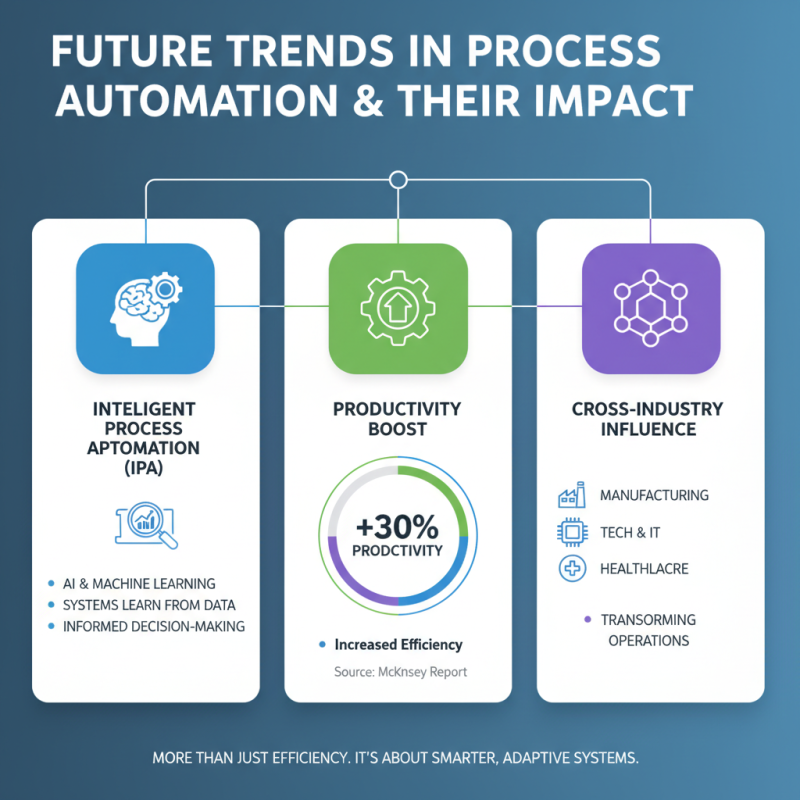
Process automation technology is evolving rapidly, influencing multiple industries. According to a report by McKinsey, automation can boost productivity by up to 30%. However, the future trends in this area suggest more than just efficiency. Companies are now focusing on intelligent process automation, incorporating machine learning and AI. This integration enables systems to learn from past data, driving more informed decision-making.
The rise of hyperautomation is another significant trend. Gartner predicts that by 2024, organizations embracing hyperautomation will lower operational costs by 30%. Companies can adopt a mix of tools and technologies to automate complex processes. But, this technology brings challenges. For instance, ensuring data privacy and security remains a critical concern. Many organizations struggle with compliance in this rapidly changing landscape.
Moreover, the skills gap poses an issue. A study highlighted that nearly 70% of organizations face difficulties in finding talent skilled in automation technologies. As businesses invest in automation, they must also prioritize upskilling their workforce. This reflects a need for balance between technological advancement and human capability. Organizations must rethink their strategies to ensure sustainable automation growth.