


China Top 10 Automation System Design Companies?
China’s automation sector has matured from isolated machine upgrades into connected production ecosystems. The leading firms now design control architectures, robotic cells, industrial software, and data networks for demanding factories. This article introduces China’s Top 10 Automation System Design Companies and examines what separates experienced integrators from ordinary equipment suppliers.
The selection considers engineering capability, project experience, technology partnerships, delivery reliability, and after-sales support. It also reviews practical details, such as PLC programming, safety interlocks, servo precision, factory layout, and production traceability. These factors often decide whether a line performs smoothly after installation. A polished demonstration is not enough.
Real projects reveal more.
A strong automation system design partner should understand a client’s process before proposing hardware. It should document requirements, test control logic, and provide clear maintenance procedures. Companies serving automotive, electronics, logistics, food processing, and pharmaceuticals may require very different solutions. Local service teams can also reduce downtime when sensors fail at 2 a.m.
This ranking is intended as a research starting point, not a permanent verdict. Market positions change, and public information may not show every company’s latest project. Some firms communicate their expertise better than others. That limitation deserves attention. Readers should verify certifications, reference sites, engineering resources, cybersecurity practices, and lifecycle costs before making a decision. The most suitable provider may not be the largest name. It may be the company that listens carefully, documents honestly, and improves the line after commissioning.
Definition and Scope of Automation System Design Companies in China
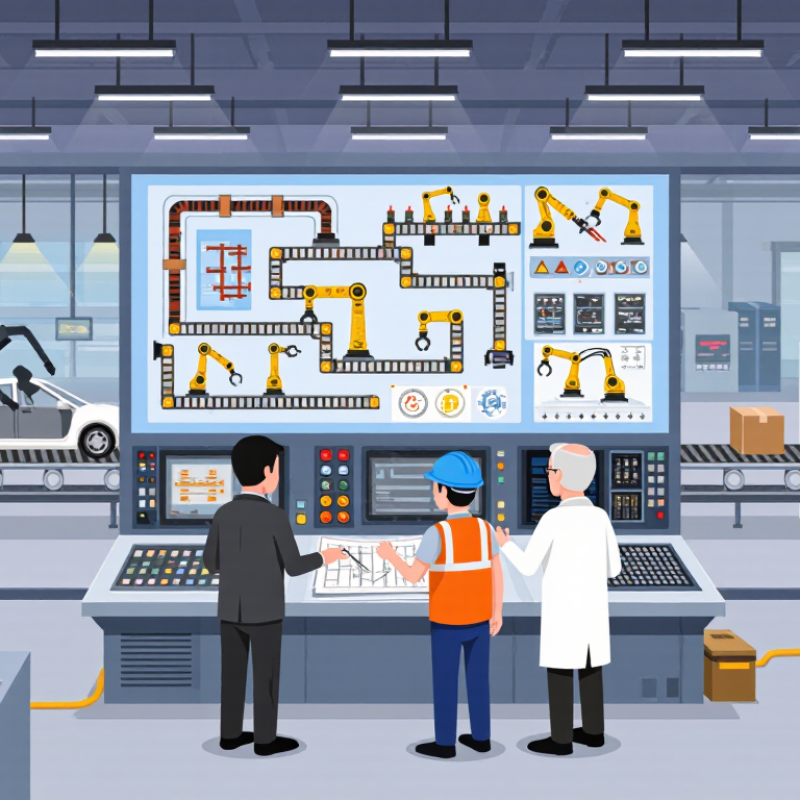
China’s automation system design companies create integrated production solutions, not merely machines. Their work may include process studies, control architecture, robotics, machine vision, safety systems, data collection, commissioning, and maintenance planning. The scope often reaches from one workstation to a complete factory line.
The International Federation of Robotics reported 276,288 industrial robot installations in China during 2023. This represented 51% of global installations. The same report recorded about 470 robots per 10,000 manufacturing employees. These figures show strong demand for engineering coordination. However, market rankings can mislead. A company may design excellent control systems while outsourcing hardware integration. Another may deliver large projects but provide limited after-sales support. The boundary is not always clean.
Tips: Compare companies by engineering depth, documented safety procedures, commissioning experience, and response time. Request evidence from similar production environments. Check whether designs support open communication protocols and future expansion. Ask for measurable results, such as reduced cycle time, lower defect rates, or improved equipment availability. A polished demonstration is not enough. Real factories are noisy, dusty, and imperfect. A reliable designer should explain failure risks, operator training, cybersecurity controls, and maintenance access. Metrics from the World Robotics report indicate market scale, but they do not prove project quality. That judgment still requires technical review and site-level evidence.
| Rank | Anonymous Provider Profile | Primary Design Scope | Typical Industry Coverage | Automation Layers | Typical Engineering Deliverables | Common Technologies and Standards | Typical Project Scale | Lifecycle Services |
|---|---|---|---|---|---|---|---|---|
| 1 | Provider Profile 01 | Integrated industrial automation, process control, plant-wide supervisory control, and production-line integration. | Chemicals Energy Metals | Field instrumentation, PLC/DCS, SCADA, MES connectivity, historian, and operations dashboards. | Functional specifications, control narratives, I/O lists, control-panel drawings, alarm philosophy, FAT/SAT documents, and commissioning plans. | IEC 61131-3, IEC 61511, ISA-88, ISA-95, OPC UA, Modbus TCP, industrial Ethernet, and redundant control architectures. | Medium to large brownfield and greenfield plants. | Concept design, detailed engineering, procurement support, commissioning, operator training, and modernization. |
| 2 | Provider Profile 02 | Discrete manufacturing automation, robotic workcells, assembly systems, machine vision, and line balancing. | Automotive Electronics Machinery | Sensors and actuators, PLC motion control, robot controllers, HMI, SCADA, traceability, and production analytics. | Layout studies, cycle-time analysis, robot-cell simulations, safety-risk assessments, electrical schematics, software specifications, and validation reports. | IEC 61131-3, ISO 10218, ISO 13849-1, PROFINET, EtherNet/IP, OPC UA, machine vision interfaces, and servo control. | Medium to large automated production lines. | Line integration, ramp-up support, preventive maintenance planning, retrofit engineering, and performance improvement. |
| 3 | Provider Profile 03 | Process automation, batch-control systems, recipe management, instrumentation engineering, and production data integration. | Pharmaceuticals Food Biotechnology | Instrumentation, PLC/DCS, batch management, electronic records, historian, MES interface, and quality data systems. | User requirements, design qualification documents, P&IDs, loop diagrams, batch recipes, validation protocols, and change-control records. | ISA-88, ISA-95, GAMP 5, 21 CFR Part 11 concepts, IEC 61131-3, OPC UA, and industrial network segmentation. | Small to large regulated production facilities. | Validation support, data-integrity assessment, system upgrades, maintenance, and compliance documentation. |
| 4 | Provider Profile 04 | Warehouse automation, material handling, automated storage and retrieval systems, conveyor controls, and logistics software integration. | E-commerce Logistics Retail Distribution | Sensors, PLCs, drives, barcode/RFID systems, warehouse-control systems, warehouse-management interfaces, and monitoring platforms. | Material-flow analysis, equipment layouts, control logic, interface specifications, throughput calculations, testing procedures, and operating manuals. | IEC 61131-3, OPC UA, REST/API integration, Ethernet-based field networks, barcode standards, and functional safety practices. | Small distribution cells to high-throughput regional hubs. | Simulation, installation supervision, go-live support, 24/7 service planning, optimization, and system expansion. |
| 5 | Provider Profile 05 | Electrical automation, substation monitoring, power-management systems, drives, energy monitoring, and industrial utility controls. | Power Utilities Infrastructure | Protection and metering interfaces, PLC/RTU, SCADA, energy-management systems, historian, and remote operations. | Single-line diagrams, protection and control specifications, communications architecture, point lists, cause-and-effect matrices, and commissioning records. | IEC 61850, IEC 60870-5-104, Modbus TCP, OPC UA, IEC 61131-3, and redundant SCADA architectures. | Industrial utilities, substations, campuses, and distributed assets. | Power-quality studies, commissioning, remote monitoring, cybersecurity hardening, maintenance, and asset upgrades. |
| 6 | Provider Profile 06 | Water and wastewater automation, pumping-station control, treatment-process instrumentation, and remote telemetry. | Water Treatment Municipal Services Environmental Systems | Field instruments, RTU/PLC, telemetry, SCADA, alarm management, reporting, and energy-performance monitoring. | Process-control descriptions, hydraulic and control reviews, I/O schedules, panel designs, alarm matrices, remote-site standards, and start-up documents. | IEC 61131-3, Modbus RTU/TCP, OPC UA, MQTT, industrial VPNs, and remote-access security controls. | Individual facilities to geographically distributed networks. | Site surveys, remote commissioning, operator training, compliance reporting, support contracts, and lifecycle upgrades. |
| 7 | Provider Profile 07 | Building and facility automation, HVAC control, central monitoring, energy optimization, and smart-facility integration. | Commercial Buildings Hospitals Data Centers | Sensors, direct digital controls, building-management systems, metering, analytics, access interfaces, and supervisory dashboards. | Controls sequences, points lists, network diagrams, equipment schedules, graphics standards, commissioning plans, and energy reports. | BACnet, Modbus, KNX, OPC UA gateways, IP networks, trend logging, and demand-control strategies. | Single buildings to multi-site facility portfolios. | Design review, commissioning, tuning, energy audits, remote monitoring, and facility-management integration. |
| 8 | Provider Profile 08 | Industrial cybersecurity, automation-network architecture, control-system modernization, and secure remote operations. | Manufacturing Energy Process Industries | Control networks, DMZs, firewalls, secure remote access, asset monitoring, SCADA, and security-event visibility. | Asset inventories, network diagrams, segmentation plans, risk assessments, access-control matrices, backup strategies, and incident-response procedures. | IEC 62443, ISO/IEC 27001 concepts, NIST CSF concepts, VLANs, firewalls, VPNs, OPC UA security, and role-based access. | Brownfield modernization and multi-site programs. | Cybersecurity assessments, patch-management planning, backup validation, monitoring, training, and incident preparedness. |
| 9 | Provider Profile 09 | Industrial digitalization, MES implementation, production traceability, cloud-edge integration, and manufacturing analytics. | General Manufacturing Consumer Goods Industrial Equipment | PLC/SCADA data sources, edge gateways, MES, quality systems, historians, dashboards, and enterprise-resource interfaces. | Data models, integration specifications, equipment-connectivity plans, KPI definitions, dashboard designs, test scripts, and deployment procedures. | ISA-95, OPC UA, MQTT, REST APIs, SQL databases, edge computing, time-series historians, and role-based access control. | Production cells to multi-plant digitalization programs. | Data assessment, pilot deployment, system integration, user training, analytics support, and continuous improvement. |
| 10 | Provider Profile 10 | Machine automation, custom equipment, motion control, packaging systems, test equipment, and special-purpose machinery. | Packaging Medical Devices Precision Equipment | Sensors, PLCs, HMIs, servo drives, robotics, vision inspection, safety controls, and production-data interfaces. | Machine specifications, sequence-of-operation documents, electrical drawings, software architecture, safety validation, FAT/SAT records, and maintenance manuals. | IEC 61131-3, ISO 13849-1, ISO 10218, EtherCAT, PROFINET, EtherNet/IP, OPC UA, and machine-vision protocols. | Individual machines to integrated equipment cells. | Feasibility studies, prototype development, factory acceptance testing, installation, troubleshooting, and retrofit services. |
Related Posts
-

China Top Vision Inspection Systems for Quality Control and Automation?
-
Top Intelligent Manufacturing Systems for Global Buyers
-
Top 10 Process Automation Technology Trends Shaping the Future?
-

How to Choose the Best Material Handling Systems for Your Business?
-

2026 How to Implement Smart Manufacturing Systems Efficiently?
-
Best Vision Inspection Systems for Quality Control in China?