
How to Choose an Enclosed Circuit Breaker?

Choosing an Enclosed Circuit Breaker starts with the circuit, not the catalog photo. The breaker must match the system voltage, continuous current, number of poles, and available fault current. Its enclosure must also suit the location. A dusty workshop, a washdown area, and a quiet indoor panel need different levels of protection. Picture a motor room where fine dust settles on warm metal. A poorly matched enclosure can turn a sound electrical choice into a maintenance problem.

Electrical educator Mike Holt is widely known for teaching practical electrical safety. A useful paraphrase of his approach is: “Match the protective device to the circuit and the conditions where it operates.” That is a guiding principle, not a substitute for product documentation. Check the manufacturer’s ratings, wiring instructions, terminal limits, and compatibility notes. Confirm that the breaker and enclosure are designed to work together. Details matter.

This guide explains how to compare those details without getting lost in specifications. It covers load requirements, interrupting capacity, enclosure ratings, installation conditions, and future service needs. A clear label on the door helps, too. Small thing. Often missed. Buyers can focus so much on amperage that they overlook heat, moisture, or available space for wiring. That happens. Before choosing, record the circuit data and the actual site conditions. Then compare products against both. If any rating or application detail remains unclear, consult a qualified electrical professional and the manufacturer.
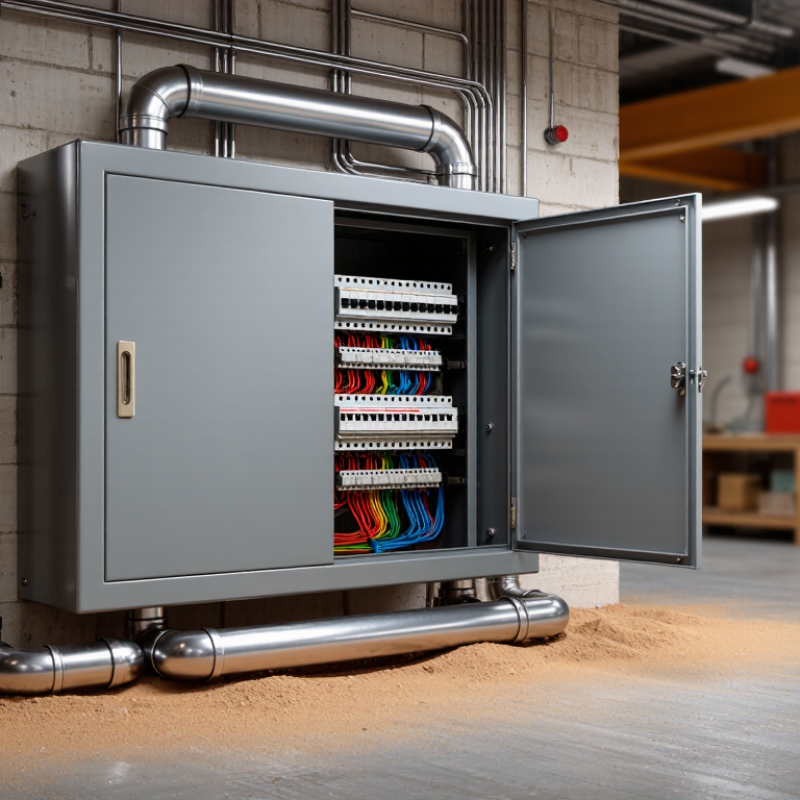
How to Choose an Enclosed Circuit Breaker?

Identify the Circuit’s Voltage, Current, and Load Requirements

How to Choose an Enclosed Circuit Breaker?

Start with the circuit’s actual voltage, not the voltage printed on a nearby appliance. Check the panel schedule, equipment nameplate, and wiring diagram. A 120/240-volt single-phase circuit and a 480-volt three-phase circuit need different breaker ratings and pole configurations. Match the breaker’s rated voltage to the system, and confirm its interrupting rating exceeds the available fault current. That detail is easy to miss.

Next, calculate the load rather than guessing from wire size. List each connected device’s rated current, then identify loads expected to run for three hours or more. For many installations, electrical-code calculations count continuous load at 125 percent. A 16-amp continuous load therefore produces a 20-amp sizing basis, subject to conductor ampacity, equipment instructions, and local requirements. Check all three. Also verify the enclosure’s environmental rating; a damp utility room is not the same as a dry cabinet.

NFPA’s Home Electrical Fires report, using 2015–2019 U.S. data, estimated an average of 46,700 home electrical fires annually. Correct protection depends on more than choosing a familiar amp rating. Record the supply voltage, calculated load, conductor size, fault-current information, and enclosure conditions before selection. If the panel label is unclear, pause and have a qualified electrician verify it; assumptions can look tidy on paper and still be wrong.

Select the Breaker Type and Interrupting Capacity

Load & Trip Selection
Choosing an enclosed circuit breaker starts with the circuit’s load and fault conditions. A thermal-magnetic trip unit suits many ordinary circuits, combining overload and short-circuit response. Larger feeders may benefit from an electronic trip unit, especially when adjustable settings help coordinate upstream and downstream protection. Check the enclosure’s environment, too. Dust, moisture, and heat can affect the suitable enclosure rating and operating conditions.

Interrupting Capacity
Interrupting capacity is the key fault-current check. The breaker’s interrupting rating must meet or exceed the maximum available fault current at its installation point, at the system voltage. That value depends on the supply and wiring, not simply the breaker’s ampere rating. A transformer close to the panel can contribute substantial fault current. Guessing is risky. Use a qualified fault-current calculation or verified system data, and confirm the rating on the product documentation.

Application & Verification
Also check that the selected breaker is listed for the intended enclosure and application. Its interrupting rating does not automatically establish the short-circuit rating of the complete equipment assembly; verify that separately. Review trip settings, conductor sizes, and coordination requirements with the system design. Small details matter. In practice, specifications can be incomplete, so I would pause and confirm the available fault-current figure before ordering. A seemingly suitable breaker may not be adequate at the actual installation point.

Match the Enclosure Rating to the Installation Environment

Match the enclosure rating to the actual exposure, not just the room label. A garage may be dry most days, yet a breaker near an open door can face windblown dust and rain. IEC 60529 rates protection with two digits: IP5X allows limited dust ingress, while IP6X is dust-tight; IPX4 covers splashing water, and IPX5 tests resistance to water jets. These figures describe specific test conditions, not every real-world installation. Small details matter.

For outdoor equipment, NEMA 250-2020 distinguishes enclosure types by exposure. Type 3R is intended to protect against rain and sleet, while Type 4 also addresses hose-directed water; Type 4X adds corrosion resistance. A coastal site, washdown area, or room with chemical vapors may need more than basic weather protection. Check the enclosure’s listed rating and the breaker manufacturer’s installation instructions, including permitted orientation and ventilation. A higher number is not automatically the right answer. I would also inspect cable entries and door seals: one poorly sealed opening can undermine an otherwise suitable enclosure.

Verify Standards, Compatibility, and Installation Requirements

Choosing an enclosed circuit breaker starts with the standard and the equipment it must protect. In North America, check whether the breaker is certified to UL 489; IEC 60947-2 is commonly used in other markets. Confirm that the breaker is approved for the specific panel or enclosure, not merely that it fits the opening. Match voltage, pole count, trip characteristics, and interrupting rating to the system’s available fault current. A close fit proves little.

Check the enclosure’s environmental rating against its location: dust, moisture, corrosion, and temperature can all matter. Verify terminal type, conductor range, wire-bending space, mounting method, and required tightening torque against the manufacturer’s instructions. Small details matter. NFPA’s 2021 Home Electrical Fires report estimated an annual average of 34,000 U.S. home structure fires involving electrical distribution or lighting equipment during 2015–2019. That broad category is not specific to breakers, but it underlines why correct equipment selection and installation deserve care. Before work begins, confirm local code requirements and have a qualified electrician assess the installation. One detail is easy to overlook: available fault current may change when the upstream supply changes, so old calculations may need review.

How to Choose an Enclosed Circuit Breaker? - Verify Standards, Compatibility, and Installation Requirements
Selection Dimension What to Verify Example or Practical Check Why It Matters
Applicable standard and certification Confirm the product standard, certification marks, and local electrical-code requirements for the installation location. UL 489 is commonly used for molded-case circuit breakers in North America; IEC 60947-2 applies to low-voltage circuit breakers in many international markets. Check the exact product documentation and jurisdictional requirements. Standards and approvals are not interchangeable. The equipment must be accepted for its intended application and region.
System voltage and frequency Match the breaker’s rated voltage and frequency to the supply system. Check the rating for the specific number of poles and circuit configuration. For a 400 V, 50 Hz system, verify that the breaker is rated for that voltage and frequency in the intended configuration. A rating shown for one configuration does not necessarily apply to another voltage, frequency, or pole arrangement.
Continuous current and load Choose a current rating appropriate for the circuit conductors, load, and applicable code. Account for continuous loads and any required derating. For a continuous load, apply the sizing rules required by the governing electrical code; do not select a breaker based only on the load’s typical operating current. The breaker must protect the circuit without nuisance tripping or allowing conductors to be overloaded.
Interrupting rating Compare the breaker’s interrupting rating at the system voltage with the available fault current at the installation point. If the available fault current is 18 kA, the breaker’s applicable interrupting rating must be at least 18 kA, unless an approved series-rated or current-limiting solution is used. An inadequate interrupting rating can create a serious hazard during a short circuit.
Poles and circuit arrangement Verify the required number of poles and suitability for the circuit, including any neutral or grounding arrangement. A three-phase circuit may require a three-pole breaker; confirm the system design and local requirements before selecting the arrangement. The correct pole configuration is necessary for proper circuit protection and disconnection.
Enclosure environmental rating Select an enclosure type appropriate to the location’s exposure to dust, water, corrosion, impact, or other environmental conditions. Specify the required NEMA enclosure type or IP code according to the project requirements. NEMA types and IP codes use different classification systems and should not be treated as direct equivalents. An unsuitable enclosure can expose live parts to environmental hazards or allow premature equipment deterioration.
Conductor and terminal compatibility Check conductor material, size range, insulation temperature rating, terminal type, and required tightening torque. Confirm that the terminals are listed for the intended copper or aluminum conductors and that the selected wire size falls within the product’s stated range. Incorrect conductor or terminal selection can cause overheating, loose connections, or equipment failure.
Mounting and enclosure space Verify mounting orientation, available panel space, clearances, wiring space, and conductor-bending room against the product instructions. Check the enclosure dimensions and internal layout before ordering; allow space for cable entry, terminations, and any required accessories. A physically incompatible device may be difficult to wire, service, or install safely.
Operating conditions and derating Review the manufacturer’s limits for ambient temperature, altitude, ventilation, and any other conditions that affect ratings. Where the installation temperature or altitude exceeds the stated reference conditions, use the documented derating guidance for the specific device. Actual operating conditions can affect current-carrying capacity and reliable operation.
Protection coordination and accessories Check coordination with upstream and downstream protective devices, and confirm compatibility of any shunt trips, auxiliary contacts, or other accessories. Use published coordination data and the system design to evaluate selective operation; confirm that accessories are approved for the selected breaker model and enclosure. Proper coordination can help limit the portion of the system affected by a fault and ensure accessories function as intended.
Installation and commissioning Follow the product instructions, applicable codes, and approved project drawings. Installation and testing should be performed by qualified personnel. De-energize and verify the circuit is de-energized before work; use specified torque values and complete required inspection and testing procedures. Correct installation reduces the risk of electric shock, arc-flash injury, loose connections, and improper operation.
Important: Example values are for illustration only. Final selection must be based on the actual system design, available fault current, applicable codes, and the breaker and enclosure manufacturers’ documentation.

Compare Available Features and Confirm the Final Selection

Compare each breaker’s electrical ratings against the actual circuit, not just the panel label. Check system voltage, pole count, continuous current, and interrupting rating against the available fault current. Then confirm the trip characteristics suit the load; a motor circuit and a lighting circuit may need different protection. Small details matter. Wire size, terminal range, ambient temperature, and accessory requirements can also affect the final choice.

The enclosure deserves equal attention. Match its protection rating to dust, moisture, corrosion, and the installation location, then verify working space and cable entry. NFPA’s Electrical Fires report, based on 2015–2019 data, estimated 24,200 U.S. home structure fires annually involving electrical distribution or lighting equipment. The report does not isolate circuit-breaker failures, but it underscores why a rating mismatch should not be treated as a minor paperwork issue. Before ordering, compare the nameplate, wiring diagram, fault-current study, and applicable product standard, such as UL 489 or IEC 60947-2. I still find one detail easy to miss: a suitable breaker can become unsuitable when the enclosure runs hot or the connected load changes. Record the assumptions behind the selection; they may need a second look later.