
In 2026, global buyers are comparing more than locks and buzzers. Door Entry Systems now connect identity, communication, visitor management, and building security. The strongest choices depend on property type, user volume, climate, network quality, and local support.
Industry data shows why this market deserves careful evaluation. Grand View Research reported that the global access control market reached approximately USD 10.3 billion in 2023, with continued growth expected through 2030. Allied Market Research also forecasts strong expansion in smart locks, driven by connected homes, hotels, offices, and rental properties. These figures describe broader security markets, not every Door Entry Systems category. Still, they confirm a clear shift toward connected entry.
The leading types include video intercom systems, keypad and PIN readers, RFID card systems, biometric readers, mobile credential platforms, smart locks, and cloud-managed hybrid systems. Video systems suit apartment entrances where residents need to see visitors clearly. Keypads remain practical for small offices and service doors. Mobile credentials reduce physical cards, but they depend on charged phones and stable applications. Biometric readers can improve identity assurance, although privacy, hygiene, and regional data requirements need close review.
No single system wins every site. That matters. A coastal hotel may need corrosion-resistant hardware, while a warehouse may prioritize fast hands-free access. Buyers should compare installation skill, offline operation, integration, cybersecurity, warranty coverage, and five-year maintenance costs. Some vendor claims sound impressive but lack independent testing. This guide examines the top Door Entry Systems for global buyers, while recognizing that the “best” option often changes after real site conditions are measured.
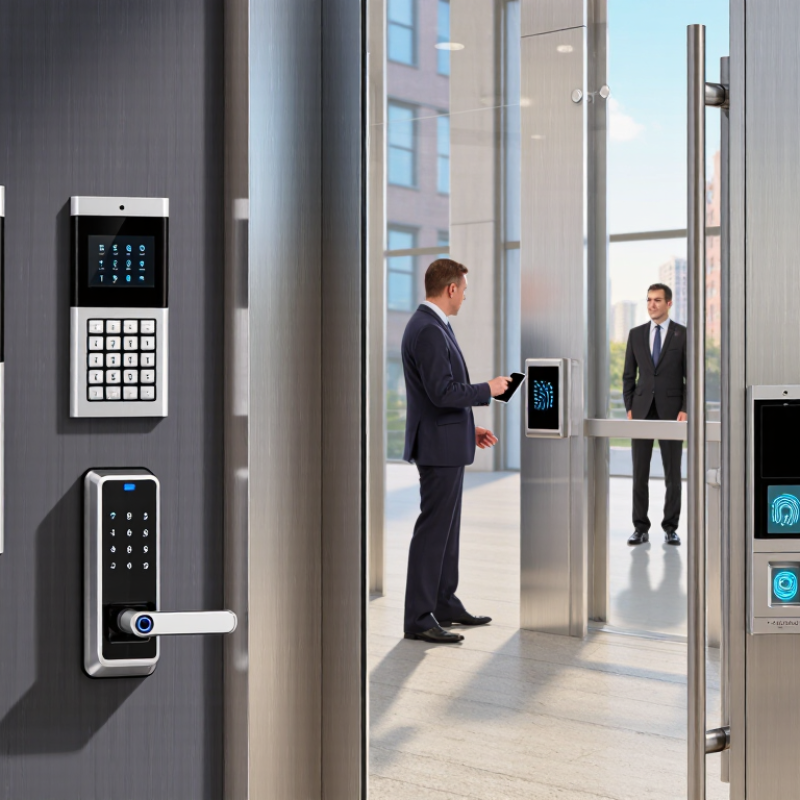
Door entry systems control who can enter a building and when. They combine a reader, controller, locking device, and exit mechanism. Common types include intercoms, keypad units, RFID readers, mobile credentials, and biometric terminals. The right choice depends on traffic, security risk, weather exposure, and maintenance skills.
A visitor presents a credential, enters a code, or requests access through an intercom. The reader sends that information to a controller. The controller checks permissions against local or cloud-based rules. If approved, it releases the electric lock for a programmed period. Sensors can record forced doors, prolonged openings, or failed attempts. Many systems also support video, audit logs, and remote administration. Simple in operation.
MarketsandMarkets valued the global access control market at about USD 10.3 billion in 2023. Its report projects growth to roughly USD 14.8 billion by 2028, showing stronger demand for connected entry management. Grand View Research also identifies cloud administration and mobile credentials as important growth factors. These figures describe access control broadly, not door entry alone, so buyers should avoid treating them as exact product-market totals.
In practical installations, reliability often matters more than impressive features. A dusty reader may fail before a sophisticated software platform does. Power backup, emergency release design, network protection, and clear user permissions require careful testing. No system is perfect. Buyers should verify local safety requirements, data handling practices, and service response times before purchase. A pilot installation can reveal weaknesses that a sales specification hides.
Door entry systems now range from mechanical cylinders to cloud-managed platforms. The main types include keypads, RFID cards, mobile credentials, biometric readers, video intercoms, and smart locks. Each option serves a different risk profile. Mechanical systems remain simple, offline, and inexpensive. However, lost keys create replacement work. Keypad systems remove physical keys, but shared codes reduce accountability. RFID systems provide faster user control and easier access records.
Biometric readers identify fingerprints, faces, or other physical traits. They suit restricted areas, yet installation quality matters greatly. Poor lighting, wet fingers, or protective equipment can reduce recognition accuracy. Video intercoms add visual verification before entry. Mobile and cloud-based systems support remote permissions, visitor scheduling, and real-time alerts.
MarketsandMarkets reports that the global access control market could grow from about USD 9.1 billion in 2023 to USD 12.8 billion by 2028. Grand View Research also identifies cloud-based control as a significant growth area through 2030. These figures suggest strong demand, not automatic suitability.
Tips: Match the system to daily traffic, door location, and backup needs. A warehouse may need RFID with offline operation. A small office may prefer a keypad and video intercom. Test the reader during power loss. Check network recovery. Review audit logs monthly. Do not collect biometric data casually; retention rules and local privacy requirements need professional review. One practical lesson is easy to miss: advanced hardware cannot repair weak user procedures. Even experienced teams sometimes overlook emergency override testing. That deserves a second look.
Choosing a door entry system starts with the building, not the product brochure. Wired systems use network or dedicated cables between readers, locks, controllers, and power supplies. They provide stable communication and predictable performance in busy entrances. However, installation can become expensive when walls are finished or buildings have several floors. A small wiring mistake may delay commissioning.
Wireless systems reduce cabling and suit renovated offices, rental properties, and temporary sites. Battery-powered locks are flexible, but batteries need scheduled inspection. Thick concrete walls, metal doors, and radio congestion can weaken signals. I have seen wireless plans look efficient on paper, then require extra repeaters during installation. That gap deserves attention.
Cloud systems move administration, event records, and permissions to an online platform. A manager can update access remotely and review entry activity across multiple locations. This helps international teams, but it depends on reliable internet and carefully assigned user roles. Buyers should examine encryption practices, backup procedures, data location, and offline operation. A cloud-connected reader should still handle a short network outage safely.
Wired, wireless, and cloud features can also work together. For example, a wired controller may support wireless locks while using cloud management. The best choice depends on door count, construction materials, maintenance skills, and security procedures. Cost estimates should include cabling, batteries, network equipment, training, and future replacements. Cheap installation can create expensive routines later.
In 2026, property type should guide the door entry choice, not fashion or feature lists. Apartment buildings often need video intercoms with call logs and remote release. Residents can screen visitors before opening shared entrances. Detached homes usually suit smart locks, video doorbells, or keypad systems. These options support family access without requiring complex building wiring. Small offices may benefit from PIN or card readers. They provide simple employee access and clearer visitor control.
Hotels, clinics, and schools require more structured systems. Hotels may need temporary codes that expire after checkout. Clinics often need controlled access between public and staff areas. Schools require monitored entrances, visitor verification, and emergency release planning. Warehouses may prefer rugged card readers with access zones. A system should match traffic volume, weather exposure, and power reliability. Cheap hardware can become expensive when maintenance is ignored. That lesson is easy to miss.
Tips: Check door material, cable routes, network strength, and backup power before ordering. Ask installers about local privacy rules and data storage. Test the system with wet hands, poor lighting, and a failed internet connection. Keep manual access procedures available. No system is perfect. A short pilot installation can reveal problems that a sales sheet will not show.
Choosing a door entry system starts with the building, not the product brochure. Common options include keypad, card, mobile, biometric, and video entry systems. Each suits different users and risks. A warehouse may need rugged cards and fast access. A residential property may prefer video calling and temporary mobile credentials. Watch a real installation if possible. A polished demo can mislead.
Global buyers should check regional voltage, network compatibility, language settings, and time-zone support. Confirm whether the system works during internet or power failures. Ask about backup batteries, offline entry, and emergency release functions. Review data storage, user permissions, and audit records with a qualified security professional. Also inspect the outdoor unit after rain, dust, and repeated use. Small details matter, such as readable buttons in low light.
Tips: Request a live test with several users. Measure the door, cable route, and mounting space first. Check replacement parts and technician response times. Compare the full ownership cost, including software fees, installation, training, and maintenance. Do not rely only on certification documents; verify their scope and date. I would also test accessibility features early, because retrofitting them can be expensive. Even experienced buyers sometimes overlook this.